Tactical Wisdom
Politics • News • Preparedness
A community of preparedness people, with a biblical foundation. We discuss preparedness advice, my books, and current events.
Interested? Want to learn more about the community?
Maccabees - 10% for the Big Guy

Sorry for missing a couple of days, but the world has gone a little mad.

As we begin 2 Maccabees 4, Simon the Fed is still making false claims to set up Onias. This time, it's that Onias conspired against the government (surprise).

2 He dared to designate as a plotter against the government the man who was the benefactor of the city, the protector of his compatriots, and a zealot for the laws.

This sounds familiar, because here, people who love the Constitution and it's promise between the People and the Government, have been designated as "plotters against the government". We're not anti-government, we're "anti-government OVERREACH". The Founders never envisioned the government having this much intrusion into your daily lives, but I digress.

With all of the unrest, most kept their heads in the sand, having a normalcy bias. Eventually, though, even Onias had to acknowledge the danger, just like we do here:

3 When his hatred progressed to such a degree that even murders were committed by one of Simon’s approved agents, 4 Onias recognized that the rivalry was serious and that Apollonius son of Menestheus, and governor of Coelesyria and Phoenicia, was intensifying the malice of Simon.

Yep, Onias realized that the GOVERNMENT itself was instigating the violence, to justify further oppression and taxation. Man, that sure sounds familiar. The purpose of CRT and DEI programs is "intensifying the malice" of allegedly oppressed and marginalized groups.

A man named Jason offered the King a bribe and was appointed High Priest. Now, this High Priest's "Reforms" led to watering down the observances of the Church and adopting the Greek's customs and pagan ways. Every kind of immorality was suddenly "reinterpreted" by the Church, and observances fell by the wayside:

13 There was such an extreme of Hellenization and increase in the adoption of foreign ways because of the surpassing wickedness of Jason, who was ungodly and no true high priest, 14 that the priests were no longer intent upon their service at the altar. Despising the sanctuary and neglecting the sacrifices, they hurried to take part in the unlawful proceedings...

This is where Western Churches are today. Churches are reinterpreting the Word and finding ways to twist it to sanctify and excuse every detestable thing. They've justified trans-sexualism, which directly calls God into question. They have justified every kind of sexual deviance and theft or envy in the name of "equity" and "justice". Hard work has been slandered by the New Church. They have slandered the institution of marriage, which was established by God in Genesis 2:18:

The Lord God said, "It is not good for the man to be alone. I will make a helper suitable for him."

Now, as the Bible shows us time and again, this always leads to disaster:

16 For this reason heavy disaster overtook them, and those whose ways of living they admired and wished to imitate completely became their enemies and punished them. 17 It is no light thing to show irreverence to the divine laws—a fact that later events will make clear.

We are at such a moment. Disaster is impending all around us. There is some other Tactical Wisdom in here...."became their enemies and punished them". What this means is that no amount of "being an ally" or "apologizing for past discrimination" is going to appease the woke mob. They may get to you last, but they will still come for you; they are still your enemy.

At this point in our Maccabees tale, more intrigue enters. Menelaus, Simon's brother, offered a bigger bribe to the King and was allowed to replace Jason. The Tactical Wisdom here is that loyalty cannot be bought, especially when you THINK you've bought it. You can pay someone to be loyal, but they're only loyal until someone else offers them more money.

Onias attempted to expose this grift and make public all of the misdeeds of the government officials. How do you suppose that went? Exactly as you might think:

33 When Onias became fully aware of these acts, he publicly exposed them, having first withdrawn to a place of sanctuary at Daphne near Antioch. 34 Therefore Menelaus, taking Andronicus aside, urged him to kill Onias. Andronicus came to Onias, and resorting to treachery, offered him sworn pledges and gave him his right hand; he persuaded him, though still suspicious, to come out from the place of sanctuary; then, with no regard for justice, he immediately put him out of the way.

There's a couple of pieces of Tactical Wisdom here. First, Onias set up his safe haven first. Have a safe location that you can defend that you can "bug out" to if needed. In TW-03, I discuss how to set up a "safe house" network with your allies. Second, Onias was only killed after he agreed to set aside his security preparations. Don't talk to the Feds! While I joke about Feds, seriously, if you've made arrangements for your security, don't set them aside for anything.

35 For this reason not only Jews, but many also of other nations, were grieved and displeased at the unjust murder of the man.

We've all heard of unjust killings and excessive force. This murder roused the people, and they began protesting. Rioting is as old as when men founded the first city-state. When the Greek forces in the Citadel tried to suppress the riots, things got spicy:

40 Since the crowds were becoming aroused and filled with anger, Lysimachus armed about three thousand men and launched an unjust attack, under the leadership of a certain Auranus, a man advanced in years and no less advanced in folly. 41 But when the Jews became aware that Lysimachus was attacking them, some picked up stones, some blocks of wood, and others took handfuls of the ashes that were lying around and threw them in wild confusion at Lysimachus and his men. 42 As a result, they wounded many of them, and killed some, and put all the rest to flight; the temple robber himself they killed close by the treasury.

It's not confirmed, but anecdotal evidence suggests that the crowd was shouting "Jewish Lives Matter" and chanting "All Greeks Are Bastards", but that has not been confirmed. In all seriousness, there is a line at which point good people can be pushed too far. April 19, 1775, on Lexington Green is one such example.

After this riot, Menelaus was charged by the King, and people thought that all was good. However, when the trial began, Menelaus offered up "10% for the Big Guy":

45 But Menelaus, already as good as beaten, promised a substantial bribe to Ptolemy son of Dorymenes to win over the king. 46 Therefore Ptolemy, taking the king aside into a colonnade as if for refreshment, induced the king to change his mind. 47 Menelaus, the cause of all the trouble, he acquitted of the charges against him, while he sentenced to death those unfortunate men, who would have been freed un-condemned if they had pleaded even before Scythians. 48 And so those who had spoken for the city and the villages, and the holy vessels quickly suffered the unjust penalty.

Not only did Menelaus go free, but he also killed his accusers. How many times have we heard of those investigating the misdeeds of the powerful dying under mysterious conditions? It's not a new thing. It's as old as government and when one man desired to rule over another no matter what.

The chapter closes with the best point yet. Despite all his misdeeds, the bad guy remained in office by promising 10% to the Big Guy, and he doubled down on his tyranny, just as we are seeing today:

50 But Menelaus, because of the greed of those in power, remained in office, growing in wickedness, having become the chief plotter against his compatriots.

Till next time....

Interested? Want to learn more about the community?
What else you may like…
Videos
Posts
Articles
Hoplite M10 Review

My video review of the Hoplite M10 Reusable Flashbang. It's a great tool available at: https://www.hoplitegear.com/product-page/m10-havoc

00:06:46
Timeline Cleanse

Time for a timeline Cleanse before WW3 kicks off.

00:00:10
INTEL UPDATE - GUYANA

This appears to be video from the fighting on the Venezuela-Guyana border.

00:00:36
Fake News - Round Two

No, Hezbollah did NOT strike a British warship.

The nearest UK Navy vessel is off Cyrpus.

Fake News Alert - UK Ship Hit

Despite the news going around, no British Navy ship has been hit by the Israelis.

WAR UPDATE - RECOVERY

The WSO from the shoot down has just been RECOVERED.

JUST IN TIME FOR EASTER.

post photo preview
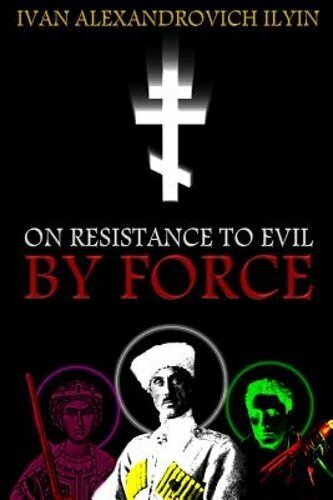
On Resistance to Evil by Force Study
Chapter 10 - On Sentimentality & Pleasure

Man, in this chapter, you can really feel Ivan's hatred for Tolstoy.  As I read this, I see Ivan as true Christians and Tolstoy as the modern Church.  It's a 1:1 comparision.

In this chapter, Ilyin addresses the idea of "love" as posited by Tolstoy as the ultimate expression of good.  Ilyin points out that this leads to egocentric behavior and allows evil to spread.

Tolstoy and his adherents define love as a feeling of sympathetic compassion.  They further define it as a feeling of objective tenderness and softness.  While this sounds good in the abstract, it leads to problems.  These feelings give our souls pleasure, which we then seek more of.  Some seek it at all costs.  Under this model, people tend to seek "love" only, and begin to avoid anything at all that might not lead to "good feelings".  Some even tend to see this type of love in a situation when it is not actually there - because they love the feeling so much.  This idea isn't morally sound as it distorts the clarity of our worldview and dilutes our personal character.

Ilyin defines this as moral hedonism or gravitating to only that which keeps us in a state of happiness.  This desire makes us avoid anything unpleasant.  We choose to "not judge" or "not assign blame", because these cause us to face unpleasantness.  We dismiss it, under the Tolstoy model.  People who subscribe to this (like the "Jesus is my boyfriend" crowd of the modern church) refuse to see any evil and say things like "I don't believe in evil" or "I don't think anyone can be evil".  They then make excuses and shrink in the face of evil - "I wouldn't want to get involved" or "It's not my business".  These are the people who just sit there when someone is attacked on the train.  These are also the people who see things as they want to see them, rather than as they are - "It's not that bad" or "Nothing ever happens".

Rather than strengthening our will, this type of "love" weakens it.  It makes people unwilling to acknowledge evil at all.  This leads to a slide in standards, accepting worse and worse behavior from our fellow man.  Ilyin poses a great question here - how could someone like that ever stand up in the face of evil when the moment arrives?  The weakness of their will prevents it.

This phenomenon leads to the opposite of love.  By refusing to engage in an attack on another person, especially a loved one, they end up denying the victim of "love".  The prefer instead to justify not getting involved - "It's none of my business" or "There was nothing I could do".  The worst of these people justify their inaction by saying things like "It was God's will."

The focus on experiencing only good things in their own lives leads to egocentrism.  Everyone else around them fades to the background as they seek the pleasure of "love" - we now call this the "Main Character Syndrome".  Some even justify some suffering as a good leading to growth.  Sure, some suffering is good, but not at the hands of actual evil.  There is enough suffering in trying to get by in the modern world.  They also say things "leave others to themselves", preferring instead to focus only on their own pleasure and "love".

Even in the case of defending loved ones, the Church, or even the State, these people will chatter online, and shout slogans, but will ALWAYS stop short at physical violence.  This is because of their refusal to be seen as even remotely imperfect or amoral.  Their image becomes more important that the actual issues at hand (insert "at least we never got violent like them" meme here).  These people are all over Facebook and X, talking tough, but then explaining all the reasons they can't do more ("I'm not going to get arrested/lose my job").  At the point of physical defense, the "love" of these people is shown to be false - they would prefer that they (or their loved ones/church/nation) die, rather than be seen as "sinning" or less than perfect.  This proves that they don't actually love anything but their image and the feelings of "love".

TW Note: In order to violently defend our friends, family, Church, or Nation, we are required to ACTUALLY love these things in a selfless and heroic way.  It also requires urgency.

This type of "love", rather than unifying us, divides us.  In order to join with others for mutual defense, you have to love something more than yourself or your image.  You have to love something bigger than you, and join like-minded people in standing up for it.

Thanks to you all for joining this study.  Share your thoughts below.

Read full Article
post photo preview
On Resistance to Evil by Force Study
Chapter 9: On the Morality of Flight

First, let me apologize fo the delay.  The Iran War and a prolonged power outage kept me from getting these out.  Mea Culpa and all that.

The topic of this chapter is the relative morality of avoiding the issue of resisting evil.  The central point is that Tolstoy and the "Jesus is My Boyfriend" or "Love is all" Christian Church posit that only your own morality and actions matter.  You cannot influence others by any way other than reason and that you cannot and should not condemn or judge the actions of others as evil or wrong, as they do not concern you.  While that sounds right on the surface, "Judge not lest you be judged", on a big enough scale, its allows evil to win.

Ilyin states that the idea of non-resistance to evil under any circumstances is juvenile at best.  It's not rooted in reality because evil does indeed exist and evil acts are perpetuated against good people.  The idea that evil acts don't really affect anyone other than the person doing them is intellectually dishonest.  There is always a victim.

The general puprose of humanity is to always improve ourselves and to always expand our abilities, according to Ilyin.  I agree with this, as I think training is important.  

Ilyin warns that people who write or teach others in response to this quest for self-improvement inherent in us all have a responsibiltiy to actually study and learn about things, rather than just express their own opinions, infected by their own biases.  He points out that these opinions are often wrong.  People who think too highly of themselves tend to pontificate their own, incorrect, opinions as fact.

A great point he makes here is that in order to properly define evil (or love, really), one must see & experience it personally, rather than just think about it in the abstract.  I agree, as anyone who has ever seen the evil men do upon other men will tell you that evil is real and needs to be opposed by strong men and women of virtue.  Otherwise, any discussion of good and evil is just an academic fallacy, presented as fact (the modern church). 

I want to expand on this idea for a second, with my own concurring ideas.  The modern church will tell you that you can never condemn others, especially another entire religion.  They will also tell you that the responsibility for protection has passed to the State, not to you, as a Christian.  However, the medeival church experienced firsthand the evil that Islam and her soldiers did upon Christians.  Their opinion was very different, and from that, when governments failed to act, the first Military Orders of Christ (THE KNIGHTS) were born.  A major historcal fallacy is that Kings and Queens knighted people.  In the modern world, I guess so, but originally, the CHURCH decided who earned the title of Knight.  While some Kings led Knights, the Knights represented the CHURCH and GOD, not the Nation-State.  They fought with the King, not for him, and this led to some spectacular disagreements.  This is coming full circle today, with Islam openly attacking both Christians and Jews once again (still).

Note:  God believes in ONE religion, and it is not Islam.

Ilyin points out that Tolstoy, and in our case the modern church, excuse evil acts as errors, mistakes, weaknesses, passions, and the like, rather than as a manifestation of evil.  They say that a good person must ignore these acts in others and be concerned only with themselves.  They constantly warn against judging or condemning any sin, rather insisting on "loving the sinner".  This is NOT Biblical.  This avoids the issue (hence "FLIGHT" in the Chapter title).  The effect of this leads to a great quote in the chapter: "Virtue enjoys its love and vice freely unleashes its evil will into the world."  Based.

Tolstoy insists that his position is reason and that any disagreement with it is "false".  That sure sounds like the modern left arguing about literally anything, doesn't it?  People believe things that aren't true and refuse to even give life to any argument that fails to confirm their bias.  It doesn't make them right, it just makes them FEEL that they are right.  You cannot reason with that.

Ilyin says that thinking only of ourselves and being concerned only with our own actions & "doing good", rather than stopping the march of evil is self-centered and gives no consideration to the greater good.  This reminds me of the meme with the guys on their knees in front of the executioner saying "at least we didn't give them a reason, right?"  This is a classic formulation of the "Main Character Theory", where you are the main character in a movie and everyone else is just an extra.  It's a logical fallacy.

The problem, according to Ilyin, is that when faced with a national evil (a communist revolution in his case - and ours) this type of person is only concerned with the image of how they responded to the situation as virtuous or not, hence "non-resistance" and the meme, yet again.  Rather than doing anything effective to stop the wider evil, they get to point out that they are better than their oppressors because they didn't resort to "violence" - despite violence being exactly what was needed and expected (even by God).

Ilyin illustrates this point with the example of being a witness to a riotous mob raping a child, while you have a gun in your hand.  Tolstoy, and the modern church, would tell you that violence is evil and not justified.  Ilyin asks, what will God say or expect you to do.  The answer is in Proverbs 24:11 (Rescue those being led away to death; hold back those staggering toward slaughter) and James 4:17 (If anyone, then, knows the good they ought to do and doesn’t do it, it is sin for them).

I know what I would do, and I hope you would too.

Leave your thoughts below.


Read full Article
post photo preview
On Resistance to Evil By Force Study
Chapter 8 Defining the Problem

Man, another banger of a chapter.  Let's dig right in.

I agree with Ilyin's preposition that the main issue is the spiritual admissibility of resistance to evil through physical compulsion and suppression, or force.  Even now, when we are faced with the collapse of western society, people keep givng me all the reason why they shouldn't resist evil in their presence.  We see people get attacked in public and almost always, perfectly capable men just stand around watching, because "I don't want to get sued" or "I might go to jail'.  In this chapter, Ilyin specifically calls out these people.

Ilyin lays out several conditions that must be met before the use of force to resist evil can be met, and I think they are very good.

First, the person must present true evil.  The evil human will must be expressed via an external act; either against you or another person.  The main problem Ilyin complained about in 1925 is the one we face today: Defining evil in people as an ailment, delusion, weakness, accident, or mistake is an evasion of the issue and absolves the wrongdoer of any responsibility.  That's our entire modern society.  I saw a video today of adults pelting NYPD officers with snowballs with no consequences.  Shameful.

Second, we must perceive the evil accurately.  We have to call it out for what it is.  Correctly perceiving evil does NOT mean accepting it - it simply means knowing it when we see it.  Most people under-play evil or evil motives.  Others just simply prefer not see it right in front of them - straight denial.  Too many people hide behind their "faith" and claim that wicked actions and wickedness can't define people - it's just a wrong done "in the moment".  As a society, we frequently turn our backs on evil, losing all right to fight it or even comment on it, because we allowed it to go on.  

Ilyin points out that only those who have see evil and resisted or rejected it before can fight it.  Those who haven't risk being morally harmed by it.   Also, he points out that anyone who has ever justified it has been morally affected by it and can't make proper judgments.  

It's worth noting that Ilyin mentions Matthew 18:6 here, mentioning the infamous millstone.

Third, according to Ilyin, in order to use force to resist evil, you must have a genuine love for good. In order to know evil, we must know good and to resist evil, we must have a preference for good.  The rigteous defender must hate the idea of evil defeating good.  Most people are simply indifferent, having a preference for good, but not really caring if evil actually wins.  There is a great quote from page 56 on this: "The true resistance to evil cannot be reduced to simply assigning blame; and cannot be exhausted by simply rejecting it; no, it puts before the person the question of life & death; demanding from him an answer, whether or not he live under the yoke of the conquering evil, and if so, how exactly he will live as if this victory had not occurred."  Man, hits me right in the chest, as I feel exactly this came way.  You see, I CANNOT live under the conditions the left wants to me under.  CAN NOT.

Fourth, to resist eil you must have a sense of justice (Ilyin calls it "a rigorous attitude toward the world process") and a decisive spirit.  In other words, the capacity to make a quick decision that justice if the right thing, right now.

Fifth, force must be the only thing that will work to stop or prevent the imminent evil act.  We must be beyond the capacity to prevent it via words or argument.  It has to be the only way to resolve it at that point.  Ilyin points out that the biggest failure here is the attitude that it is "none of my business". 

Ilyin ends this chapter on a strong note, pointing out that evil must be opposed and stopped.

This book gets better each time I read it and I find more and more that we are in an existential war with evil forces.

Let me know your thoughts below.


Read full Article
See More
Available on mobile and TV devices
google store google store app store app store
google store google store app tv store app tv store amazon store amazon store roku store roku store
Powered by Locals