

Tactical Wisdom
Politics • News • Preparedness
A community of preparedness people, with a biblical foundation. We discuss preparedness advice, my books, and current events.
Interested? Want to learn more about the community?
INTEL BRIEF - KINMEN ISLANDS CLASH

As most of you know, NC Scout and I have long predicted that the war over Taiwan will begin with Kinmen Island.

The China Coast Guard has seized a fishing vessel off Kinmen. The Taiwan Coast Guard attempted to intervene, but called off the operation as China escalated their response.

Tensions are likely to spike around Kinmen.

Interested? Want to learn more about the community?
What else you may like…
Videos
Posts
Articles
Hoplite M10 Review

My video review of the Hoplite M10 Reusable Flashbang. It's a great tool available at: https://www.hoplitegear.com/product-page/m10-havoc

00:06:46
Timeline Cleanse

Time for a timeline Cleanse before WW3 kicks off.

00:00:10
INTEL UPDATE - GUYANA

This appears to be video from the fighting on the Venezuela-Guyana border.

00:00:36
INTEL UPDATE - CHINA

The Chinese Embassy in DC is putting up barbed wire obstacles for an unknown reason.

WAR UPDATE - FAILED NEGOTIATIONS

JD Vance just announced that negotiations with Iran have failed.

INTEL UPDATE - IRELAND

The Gardai have been conducting operations all day to clear the refinery protest. They are meeting resistance.

post photo preview
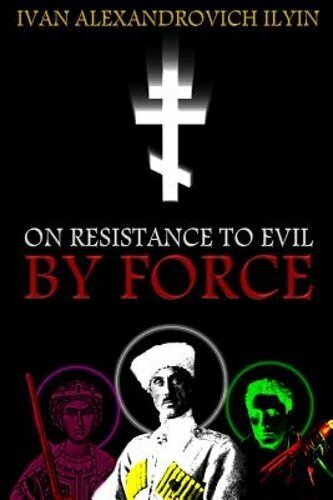
On Resistance to Evil By Force Study
Chapter 11 On Nihilism & Pity

First let me apologize.  Allen, the 86 year old man who founded the charity I represent, went into the hospital and that took me away from everything for a few days as I ran the charity and arranged some legal protections for Camp Ponderosa.  I'm back, Allen is on the mend, so let's get to it.

Boy, these chapters are getting DEEP.  More and more, I'm seeing parallels.

Tolstoy, like the modern Church, confuses God's will with his own moral experience.  He chooses to ignore any Scripture that disagrees ("Rescue those being led away to death; Hold back those stmubling towards the slaughter" with his viewpoint.  He calls those parts "the old ways" or "superstitions", just like we do now.  Moralists (as Tolstoys followers were called) disregarded and belittled any science or art that disagreed with thier worldview.  This part really struck me because look at how the modern media and left treated things like Ivermectin or any evidence that refuted Climate Change.

These people, like the modern Church and left, see justice as intimidation (see the Papal stance on immigration enforcement).They viewed the suspects and accused as the victim and the police as "thugs".  The reject law enforcement, money, big business, and inheritances.  Man, does that sound familiar??  

In yet another parallel, they saw patriotism and love of the homeland as silly.  They felt that defense of the motherland was evil.  Even though it was 100 years ago, they wanted no regard for race or nationality and to allow immigrants to freely settle, while providing assistance to them.  History repeats or rhymes.

Their final point is that nothing is worht dying over or killing in the defense of.

Moralism, which we call liberalism today, requires pitying the suffering of all others, except your own suffering.  It requires personal suffering, even to the point of death, rather than resisting and causing someone else to "suffer" as a result of your resistance.

These types posit that if suffering is evil, then inflicting suffering is evil, even it is meant to end someone else's suffering (for example, punching someone who is attacking someone else).  A side effect of this is the feeling that not only should no suffer at the hands of others, but no should ever be offended.  Boy, does that ring a bell?  Therefore, violence as resistance is condemned for inflciting suffering on others.

Tolstoy & his "moralists" see love as the one true good, but their love is only surface-level, and never goes to love of spirit.  The ultimate virtue is being weak-willed with unspiritual love of just outward facing things.

In evaluating violence, they do not separate the villains from the non-villains.  This distorts the idea of good & evil.  Weak and irresponsible men (like men who allow women to be attacked in their presence) and called heroic (stunning & brave).  Heroic men with righteous anger are called shameful and base (in 1925, being "based" wasn't a good thing).  This ends up leaving the adherents unspiritual, self-pitying, and indulgent.

According to Ilyin, one who walks in truth (carries the light, so to speak) finds a reason to live, struggle, and resist.  They find "a jewel worth living & dying for".

The moralist approach leads to a corruption of the ideal of justice, national pride, and church.  Instead of payback & venegeance, they forgive and pity the criminal.  Just like today.  In reality, the cirminal deserves outrage rather than pity.

The moralists preached that love is honoring someone else's animalism or vulgarity, while Ilyin says that true love is love for their spirit and wanted them to improve, rather than justifying their ways.

The chapter ended on something that really stuck with me, as I say this too all of the time.  Ilyin said that the people were more worried about "not causing trouble" to their neighbors than advancing His Kingdom and doing His willl.  Amen brother.

Discuss your thoughts below.  I promise we'll get back to a couple of chapters a week.

Read full Article
post photo preview
On Resistance to Evil by Force Study
Chapter 10 - On Sentimentality & Pleasure

Man, in this chapter, you can really feel Ivan's hatred for Tolstoy.  As I read this, I see Ivan as true Christians and Tolstoy as the modern Church.  It's a 1:1 comparision.

In this chapter, Ilyin addresses the idea of "love" as posited by Tolstoy as the ultimate expression of good.  Ilyin points out that this leads to egocentric behavior and allows evil to spread.

Tolstoy and his adherents define love as a feeling of sympathetic compassion.  They further define it as a feeling of objective tenderness and softness.  While this sounds good in the abstract, it leads to problems.  These feelings give our souls pleasure, which we then seek more of.  Some seek it at all costs.  Under this model, people tend to seek "love" only, and begin to avoid anything at all that might not lead to "good feelings".  Some even tend to see this type of love in a situation when it is not actually there - because they love the feeling so much.  This idea isn't morally sound as it distorts the clarity of our worldview and dilutes our personal character.

Ilyin defines this as moral hedonism or gravitating to only that which keeps us in a state of happiness.  This desire makes us avoid anything unpleasant.  We choose to "not judge" or "not assign blame", because these cause us to face unpleasantness.  We dismiss it, under the Tolstoy model.  People who subscribe to this (like the "Jesus is my boyfriend" crowd of the modern church) refuse to see any evil and say things like "I don't believe in evil" or "I don't think anyone can be evil".  They then make excuses and shrink in the face of evil - "I wouldn't want to get involved" or "It's not my business".  These are the people who just sit there when someone is attacked on the train.  These are also the people who see things as they want to see them, rather than as they are - "It's not that bad" or "Nothing ever happens".

Rather than strengthening our will, this type of "love" weakens it.  It makes people unwilling to acknowledge evil at all.  This leads to a slide in standards, accepting worse and worse behavior from our fellow man.  Ilyin poses a great question here - how could someone like that ever stand up in the face of evil when the moment arrives?  The weakness of their will prevents it.

This phenomenon leads to the opposite of love.  By refusing to engage in an attack on another person, especially a loved one, they end up denying the victim of "love".  The prefer instead to justify not getting involved - "It's none of my business" or "There was nothing I could do".  The worst of these people justify their inaction by saying things like "It was God's will."

The focus on experiencing only good things in their own lives leads to egocentrism.  Everyone else around them fades to the background as they seek the pleasure of "love" - we now call this the "Main Character Syndrome".  Some even justify some suffering as a good leading to growth.  Sure, some suffering is good, but not at the hands of actual evil.  There is enough suffering in trying to get by in the modern world.  They also say things "leave others to themselves", preferring instead to focus only on their own pleasure and "love".

Even in the case of defending loved ones, the Church, or even the State, these people will chatter online, and shout slogans, but will ALWAYS stop short at physical violence.  This is because of their refusal to be seen as even remotely imperfect or amoral.  Their image becomes more important that the actual issues at hand (insert "at least we never got violent like them" meme here).  These people are all over Facebook and X, talking tough, but then explaining all the reasons they can't do more ("I'm not going to get arrested/lose my job").  At the point of physical defense, the "love" of these people is shown to be false - they would prefer that they (or their loved ones/church/nation) die, rather than be seen as "sinning" or less than perfect.  This proves that they don't actually love anything but their image and the feelings of "love".

TW Note: In order to violently defend our friends, family, Church, or Nation, we are required to ACTUALLY love these things in a selfless and heroic way.  It also requires urgency.

This type of "love", rather than unifying us, divides us.  In order to join with others for mutual defense, you have to love something more than yourself or your image.  You have to love something bigger than you, and join like-minded people in standing up for it.

Thanks to you all for joining this study.  Share your thoughts below.

Read full Article
post photo preview
On Resistance to Evil by Force Study
Chapter 9: On the Morality of Flight

First, let me apologize fo the delay.  The Iran War and a prolonged power outage kept me from getting these out.  Mea Culpa and all that.

The topic of this chapter is the relative morality of avoiding the issue of resisting evil.  The central point is that Tolstoy and the "Jesus is My Boyfriend" or "Love is all" Christian Church posit that only your own morality and actions matter.  You cannot influence others by any way other than reason and that you cannot and should not condemn or judge the actions of others as evil or wrong, as they do not concern you.  While that sounds right on the surface, "Judge not lest you be judged", on a big enough scale, its allows evil to win.

Ilyin states that the idea of non-resistance to evil under any circumstances is juvenile at best.  It's not rooted in reality because evil does indeed exist and evil acts are perpetuated against good people.  The idea that evil acts don't really affect anyone other than the person doing them is intellectually dishonest.  There is always a victim.

The general puprose of humanity is to always improve ourselves and to always expand our abilities, according to Ilyin.  I agree with this, as I think training is important.  

Ilyin warns that people who write or teach others in response to this quest for self-improvement inherent in us all have a responsibiltiy to actually study and learn about things, rather than just express their own opinions, infected by their own biases.  He points out that these opinions are often wrong.  People who think too highly of themselves tend to pontificate their own, incorrect, opinions as fact.

A great point he makes here is that in order to properly define evil (or love, really), one must see & experience it personally, rather than just think about it in the abstract.  I agree, as anyone who has ever seen the evil men do upon other men will tell you that evil is real and needs to be opposed by strong men and women of virtue.  Otherwise, any discussion of good and evil is just an academic fallacy, presented as fact (the modern church). 

I want to expand on this idea for a second, with my own concurring ideas.  The modern church will tell you that you can never condemn others, especially another entire religion.  They will also tell you that the responsibility for protection has passed to the State, not to you, as a Christian.  However, the medeival church experienced firsthand the evil that Islam and her soldiers did upon Christians.  Their opinion was very different, and from that, when governments failed to act, the first Military Orders of Christ (THE KNIGHTS) were born.  A major historcal fallacy is that Kings and Queens knighted people.  In the modern world, I guess so, but originally, the CHURCH decided who earned the title of Knight.  While some Kings led Knights, the Knights represented the CHURCH and GOD, not the Nation-State.  They fought with the King, not for him, and this led to some spectacular disagreements.  This is coming full circle today, with Islam openly attacking both Christians and Jews once again (still).

Note:  God believes in ONE religion, and it is not Islam.

Ilyin points out that Tolstoy, and in our case the modern church, excuse evil acts as errors, mistakes, weaknesses, passions, and the like, rather than as a manifestation of evil.  They say that a good person must ignore these acts in others and be concerned only with themselves.  They constantly warn against judging or condemning any sin, rather insisting on "loving the sinner".  This is NOT Biblical.  This avoids the issue (hence "FLIGHT" in the Chapter title).  The effect of this leads to a great quote in the chapter: "Virtue enjoys its love and vice freely unleashes its evil will into the world."  Based.

Tolstoy insists that his position is reason and that any disagreement with it is "false".  That sure sounds like the modern left arguing about literally anything, doesn't it?  People believe things that aren't true and refuse to even give life to any argument that fails to confirm their bias.  It doesn't make them right, it just makes them FEEL that they are right.  You cannot reason with that.

Ilyin says that thinking only of ourselves and being concerned only with our own actions & "doing good", rather than stopping the march of evil is self-centered and gives no consideration to the greater good.  This reminds me of the meme with the guys on their knees in front of the executioner saying "at least we didn't give them a reason, right?"  This is a classic formulation of the "Main Character Theory", where you are the main character in a movie and everyone else is just an extra.  It's a logical fallacy.

The problem, according to Ilyin, is that when faced with a national evil (a communist revolution in his case - and ours) this type of person is only concerned with the image of how they responded to the situation as virtuous or not, hence "non-resistance" and the meme, yet again.  Rather than doing anything effective to stop the wider evil, they get to point out that they are better than their oppressors because they didn't resort to "violence" - despite violence being exactly what was needed and expected (even by God).

Ilyin illustrates this point with the example of being a witness to a riotous mob raping a child, while you have a gun in your hand.  Tolstoy, and the modern church, would tell you that violence is evil and not justified.  Ilyin asks, what will God say or expect you to do.  The answer is in Proverbs 24:11 (Rescue those being led away to death; hold back those staggering toward slaughter) and James 4:17 (If anyone, then, knows the good they ought to do and doesn’t do it, it is sin for them).

I know what I would do, and I hope you would too.

Leave your thoughts below.


Read full Article
See More
Available on mobile and TV devices
google store google store app store app store
google store google store app tv store app tv store amazon store amazon store roku store roku store
Powered by Locals