Tactical Wisdom
Politics • News • Preparedness
GMRS Research/Training
August 11, 2024
post photo preview

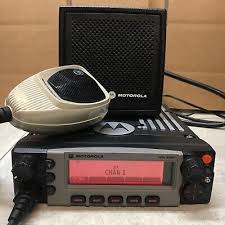
A couple of weeks ago, another guy and I ran a two-vehicle convoy from Michigan to Montana.  We coordinated and communicated using GMRS radio.  Along the way, I had my vehicle mounted XTL 5000 radio from Motorola scanning the GMRS repeaters and the simplex channels.  In this article, we're going to talk about what we learned, what worked, and what didn't work.  We'll also talk about how you can better prepare and practice yourself.

First, let's talk gear.  My vehicle radio is a Motorola XTL 5000.  It's a UHF radio that you can find on e-bay for a couple hundred dollars.  It's a 50 watt radio that allows you to program 1000 channels, as long as you have the software and cable.  Mine is in what Motorola calls "UHF I" range or 380-470 Mhz.  This is important because UHF II is 450-520 Mhz, and while both can do GMRS, I have mine programmed for international operations and need a lower range (446 Mhz) for Europe.  This radio has a detachable control head that is kept on my console, with the main unit being under the driver's seat.  The external speaker sits on the transmission hump.

Bill used a Baofeng AR-152 10 watt handheld.  As a supplement, I had a Motorola XTS 5000, the handheld version of the vehicle radio, only because it scans faster than the Baofeng does.  Truthfully, aside from scanning speed and encryption, the Baofeng UV-5R and AR-152 units OUTPERFORM the expensive Motorolas where it matters - transmit and receive range.  Sure, the Motorola has better features, but in what really matters, the Baofeng is king.

Let's talk about what we learned....but first, this is where you become a paid supporter.



Only for Supporters
To read the rest of this article and access other paid content, you must be a supporter
4
What else you may like…
Videos
Posts
Articles
BattlBox Mission 134 Unboxing

Here's my unboxing of BattlBox Mission 134: Every Day Carry. I highly recommned BattlBox.

Link to BattlBox: https://classic.avantlink.com/click.php?tool_type=ml&merchant_link_id=18d5f0dc-a5d5-4617-8d89-3672fa873181&website_id=b54d42a2-3e73-4f03-ac0d-a3e7b99eed53

00:14:14
Hoplite M10 Review

My video review of the Hoplite M10 Reusable Flashbang. It's a great tool available at: https://www.hoplitegear.com/product-page/m10-havoc

00:06:46
Timeline Cleanse

Time for a timeline Cleanse before WW3 kicks off.

00:00:10
INTEL BRIEF - English Channel

A Russian Warship has fired a warning shot at a British yacht inside the English Channel. The UK Navy has sent units to respond, as have the French.

Word has it the French have already surrendered (JK).

INTEL BRIEF - 911

911 service has gone out in several areas across the country. Parts of WA, AZ, TX, and IA all are experiencing outages simultaneously.

INTEL BRIEF-USAF CRASH

A B52 Stratofortress has crashed at Edwards AFB in California. No word on survivors.

post photo preview
On Resistance to Evil by Force Study
Chapter 14: On the Subject of Love

Link to buy book: On Resistance to Evil by Force

Another great chapter, but a little shorter and a bit easier to read, mostly because I already understood this concept and knew all the Scripture he referenced.

Resisting evil is ONLY meaningful if it is done on behalf of good.  In other words, only the virtuous can recognize the evil and resist it from a stance of wanting to do good.  When evil happens to oppose some other evil, it is usually in service of it's own evil ideas, rather than a desire to do good.  At best, it is a collision of evil intentions between two others.  This means that us, as the virtuous, have to fight evil on two fronts, rather than just one.  This gives lie to the idea that "the enemy of my enemy is my friend"; no, he is still your enemy and you'll have to fight him too, as soon as your paths diverge from the current same direction.  As Ilyin quoted in the book, if one snake eats the other snake, there is still a snake to deal with.

Ilyin points out that resisting evil is a net good and thus stems from spritual love.  

Love without a spiritual component is risky.  That leads to temptation and the potential to do evil under the guise of advancing love.  It becomes blind and self-defeating.  The spiritual component is what compels us to be willing to die for something other than ourselves.

Ilyin points out the truth in Matthew 22:38 (Jesus replied, "Love the Lord your God with all your heart, with all your soul, and with all your mind - this the First and Greatest Commandment", you heathens).  We must love God first in order to love our neighbors and see them in a new light.  Only then can we truly "Love thy neighbor."  Loving God is required and is inseparable from loving your neighbor.  This means that you see the Holy Spirit in others, just as it is in you.  

The movie The Road comes to mind.  In it, the father keeps telling the boy that they are "carrying the fire".  When the father dies and the boy meets a new family, he first asks them if they are "carrying the fire".  I think this is the same idea.

According to Ilyin, you must be a Son (or Daughter) of God to see anyone else as a Son of God.  This loves gives you a feeling of connection to something bigger than yourself.  These include: God, Church, homeland, your leaders, the other people.  This connects you to a cause that you would be willing to die for.

Ilyin writes that those who lack spiritual love usually put usefulness and equality above divinity (sound familiar?).  They say that everyone is equal and the no one is right or wrong.  This is where "living their truth" comes from.  They see events as destined to happen or inevitable.  They believe that everyone's happiness is more important than anything else.

On the other hand, those with spiritual love generally put divinity and goodness above all else, especially over usefulness or happiness.  Spiritual love knows that all are not equal.  This is where Ilyin drops the BANGER quote of the day: There are those "who are better off being killed than allowed to do evil."  WOW.  This is truly loving thy neighbor.  It's saying I love you too much to let you destroy your soul with an evil act, so I will stop you.  In this section, we see Ilyin quote the three eyewitness accounts of Jesus laying it down with the millstone quote (Matthew 18:6, Mark 9:42, and Luke 17:1-2).  One with spiritual love also knows the danger of letting "happiness" be the standard, because most people are perfectly happy with sin.

Another great Ilyin quote is in the chapter's closing:

"Noble death is always better than shameful life."

SIde note, in this chapter Ilyin leaves a footnote that references Heraclitus, fragment 49:

"To me, one man is worth 10,000 if he is first rate."

This means that a man with wisdom and courage is better than 10,000 without.  Strive to be the one man.  Be worthy of each other.

Let me know your thoughts below.

Read full Article
post photo preview
On Resistance to Evil by Force
Chapter 13: Overall Framework

Sorry for the delays this month - Allen's passing has really taken a lot more time and energy than I anticipated.  Thank you for sticking with me.

Ilyin opens the chapter by pointing out that only the truly good and truly faithful get to have a say in this discussion.  The spiritually lukewarm "come as you are" Christians or the "Living My Truth" folks are not morally strong enough to have a say.  They always equivocate or rationalize rather than take a stand.

An interesting point that Ilyin makes in this chapter is that no one ever asks if the villain is justified or morally right in his actions, only the righteous defender or person who intervenes.  They know that the villain isn't but did it anyway.  It's far easier to make the virtuous person feel guilty than the villain.  We saw this in our current world with both the Rittenhouse and Penny cases.  No one disucssed the attackers, just the defenders.  Saint Floyd is yet another example of this.

According to the text, our purpose in intervention should flow from a will to do good and to turn others to good.  We must aim to strengthen & implement good in the soul.

The weak and fearful always equalize good and evil in order to justify their own inaction.  They claim that everyone has a reason for the things they do and that culture/class differences cause evil behavior (sound familiar?).  The truth is that evil and good ARE NOT equal and neither are people who act evil and those who act good.  Never fall into this trap.

Interestingly, Ilyin said that people in his time said that you can't fix humanity's problems with incarceration and capital punishment.  It is so crazy that 100 years later, we are hearing people say the exact same thing.

Ilyin points out that physical action by itself is not enough.  We need faithfully directed social education towards good.  Force itself is temporary, spiritual foundations are permanent.

He explains it in a good way next.  Good and evil are in the mind, but they work through our physical bodies via physical action.  In order to stop physical evil, we must sometimes use our bodies (physical force) to stop the evil actions of another body (physical resistance by force).

While force is sometimes needed and perfectly permissible, it's use should be limited and a last resort.  Mental/spiritual complusion and reason should be used first, whenever possible, as it provides more lasting change than physical restraint does.  For this same reason, we must object to things like excessive force and torture.  While they might get compliance, it isn't spiritual compliance.  These things also breed contempt.

Ilyin notes that you cannot use force to compel love.

According to Ilyin, the use of force should not deprive the other person for the chance to use free will to change their behavior.  As long as reasoning works, it should be used and force avoided.  Phyiscal force, according to Ilyin, is permissible only when psychospiritual action (reasoning/appeals to humanity) is insufficient, invalid, or unfeasible.  Other factors to consider when deciding to use force include the time available (is an attack in progress or imminent), the intelligence or maturity level of the subject, the morality or culture of the subject, crowd behavior, and war considerations (not much reasoning during battle).

Ilyin makes another great point: We must always strive to comprehend the nature of evil and always be finding ways and means to overcome it.

Ilyin closes this chapter with 5 rules for the use of physical force in resistance to evil:

  1. We must be vigilant to recognize evil and to distinguish it from things that look similar (stupidity can look a lot like evil).
  2. We must learn how to prevent the growth of evil and to cultivate good.
  3. The one who resists must begin with spiritual measures whenever possible and understand that force is not independent of spiritual means.  They must be used together.
  4. We must understand when to stop using force and compulsion.
  5. We must keep tabs on our own motives to prevent evil from growing in us as we fight evil.

I loved this chapter.  Let me know your thoughts below.

Read full Article
post photo preview
On Resistance to Evil by Force Study
Chapter 12: On the World-Rejecting Religion

Ilyin begins fiery in this chapter, calling the "moralists" vague and inconsistent, and he's right.  We see this exact same behavior today with people who refuse to see the world as it is and attribute good morals and motivations to folks who just don't have any or to excuse behavior as a "quirk" or "being different".  Ilyin also points out that these people are 100% self-absorbed so their delusion rarely impacts their internal world in any meaningful way, and since they don't truly care what happens to others, they don't have an emotional reaction when a bad thing happens (it didn't imapct me, so why should I care?).

Ilyin points out the hypocrisy of Tolstoy and his followers believing both that the natural world has no violence in it and also that everything done against anyone else's wishes is violence.  He points out that the moralists decried seeking wealth and property as evil (socialism) and that they insisted that before any one has a child, all other children must be provided for first (again, socialism).  This is yet another parallel to our modern society where child-bearing is shunned and treated as unnecessary.  Ironically, no other creature in creation does this to their own species.

The list of things that the moralists (Tolstoy's followers and "Red Russians") wanted or were opposed to could be pulled from our struggles today, 100 years later.  He lists: Only physical labor is work and the benefit of someone else's labor is sinful, the need to abolish land ownership, they wanted to abolish hiring employees and paying rent, abolish laws and the military, limit factory production, eliminate the idea of money, and they wanted to abolish hunting and the eating of meat.  Weird, isn't it?

Tolstoy, in his writings, said that even if confronted with a man holding a knife to a victim while he himself had a revolver, he could not intervene.  Tolstoy said "I don't know if the man will strike the victim with the knife, but I know that my bullet will kill him.".  Tolstoy's position is that God's Will is what determines whether or not the victim is killed and we cannot interfere with that.  Of course, that is ludicrous on it's face and Ilyin spends a few paragraphs pointing that out.  In my mind, perhaps God put me there specifically to save one life and potentially more down the road by ending this one evil soul.

The moralists, and today's leftists, hide from the struggle between good and evil by blurring the lines nad saying that no one can judge another's morals and that intervening in their actions (even robbery or assault) is against the will of God.  Saying that, according to Ilyin, is a dodge meant to absolve them of anything in the world that doesn't directly impact them.

Tolstoy's people took it a step further, declaring that stopping someone from harming another (even a child) is immoral and blasphemy, because you are interrupting God's Will.  To believe this, Ilyin rightly points out, we'd have to beleive that God wants the innocent to be killed by the wicked and children abused.  That is just ridiculous on it's face, but we hear the same argument today, 100 years later.

This idea leads to victimhood and victim worship, while offers absolutely no deterrence to the offender.  The offender has literally no reason to stop, as no one will attach any consequence.  Ilyin points out the hypocrisy of pretending to love nad have sympathy while also allowing crime to go on undeterred.

Ilyin closes by reminding us that Tolstoy's moralist have a religious lack of will and a spiritual indifference, neither of which come from God.

Let me know your thoughts below.


Read full Article
See More
Available on mobile and TV devices
google store google store app store app store
google store google store app tv store app tv store amazon store amazon store roku store roku store
Powered by Locals