

Tactical Wisdom
Politics • News • Preparedness
A community of preparedness people, with a biblical foundation. We discuss preparedness advice, my books, and current events.
Interested? Want to learn more about the community?
INTEL BRIEF - QUANTICO BREACH

One of the two individuals arrested and released for trying to enter Quantico under false pretenses has just been arrested by ICE. The subject is a Jordanian National.

Interested? Want to learn more about the community?
What else you may like…
Videos
Posts
Articles
BattlBox Mission 134 Unboxing

Here's my unboxing of BattlBox Mission 134: Every Day Carry. I highly recommned BattlBox.

Link to BattlBox: https://classic.avantlink.com/click.php?tool_type=ml&merchant_link_id=18d5f0dc-a5d5-4617-8d89-3672fa873181&website_id=b54d42a2-3e73-4f03-ac0d-a3e7b99eed53

00:14:14
Hoplite M10 Review

My video review of the Hoplite M10 Reusable Flashbang. It's a great tool available at: https://www.hoplitegear.com/product-page/m10-havoc

00:06:46
Timeline Cleanse

Time for a timeline Cleanse before WW3 kicks off.

00:00:10
INTEL BRIEF - NYC

There is a violent Pro-Palestine riot occuring in NYC at the moment.

INTEL BRIEF - ANOTHER ATTEMPT

A suspect has been shot after firing shots at Vance's motorcade near the White House.

Some people say its not an insurgency, but they're wrong.

INTEL BRIEF - Mexico

Mexico has devolved into violence as yet another cartel leader is captured. El Jardinero was a leader of CJNG (Cartel Jalisco Neuvo Generacion).

post photo preview
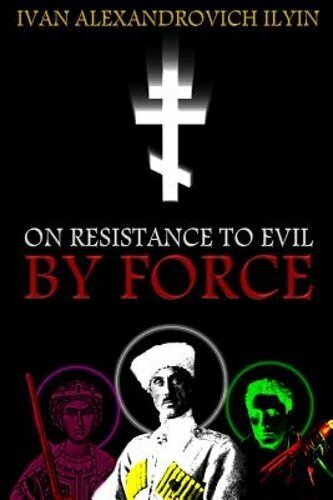
On Resistance to Evil by Force Study
Chapter 12: On the World-Rejecting Religion

Ilyin begins fiery in this chapter, calling the "moralists" vague and inconsistent, and he's right.  We see this exact same behavior today with people who refuse to see the world as it is and attribute good morals and motivations to folks who just don't have any or to excuse behavior as a "quirk" or "being different".  Ilyin also points out that these people are 100% self-absorbed so their delusion rarely impacts their internal world in any meaningful way, and since they don't truly care what happens to others, they don't have an emotional reaction when a bad thing happens (it didn't imapct me, so why should I care?).

Ilyin points out the hypocrisy of Tolstoy and his followers believing both that the natural world has no violence in it and also that everything done against anyone else's wishes is violence.  He points out that the moralists decried seeking wealth and property as evil (socialism) and that they insisted that before any one has a child, all other children must be provided for first (again, socialism).  This is yet another parallel to our modern society where child-bearing is shunned and treated as unnecessary.  Ironically, no other creature in creation does this to their own species.

The list of things that the moralists (Tolstoy's followers and "Red Russians") wanted or were opposed to could be pulled from our struggles today, 100 years later.  He lists: Only physical labor is work and the benefit of someone else's labor is sinful, the need to abolish land ownership, they wanted to abolish hiring employees and paying rent, abolish laws and the military, limit factory production, eliminate the idea of money, and they wanted to abolish hunting and the eating of meat.  Weird, isn't it?

Tolstoy, in his writings, said that even if confronted with a man holding a knife to a victim while he himself had a revolver, he could not intervene.  Tolstoy said "I don't know if the man will strike the victim with the knife, but I know that my bullet will kill him.".  Tolstoy's position is that God's Will is what determines whether or not the victim is killed and we cannot interfere with that.  Of course, that is ludicrous on it's face and Ilyin spends a few paragraphs pointing that out.  In my mind, perhaps God put me there specifically to save one life and potentially more down the road by ending this one evil soul.

The moralists, and today's leftists, hide from the struggle between good and evil by blurring the lines nad saying that no one can judge another's morals and that intervening in their actions (even robbery or assault) is against the will of God.  Saying that, according to Ilyin, is a dodge meant to absolve them of anything in the world that doesn't directly impact them.

Tolstoy's people took it a step further, declaring that stopping someone from harming another (even a child) is immoral and blasphemy, because you are interrupting God's Will.  To believe this, Ilyin rightly points out, we'd have to beleive that God wants the innocent to be killed by the wicked and children abused.  That is just ridiculous on it's face, but we hear the same argument today, 100 years later.

This idea leads to victimhood and victim worship, while offers absolutely no deterrence to the offender.  The offender has literally no reason to stop, as no one will attach any consequence.  Ilyin points out the hypocrisy of pretending to love nad have sympathy while also allowing crime to go on undeterred.

Ilyin closes by reminding us that Tolstoy's moralist have a religious lack of will and a spiritual indifference, neither of which come from God.

Let me know your thoughts below.

 

Read full Article
post photo preview
On Resistance to Evil By Force Study
Chapter 11 On Nihilism & Pity

First let me apologize.  Allen, the 86 year old man who founded the charity I represent, went into the hospital and that took me away from everything for a few days as I ran the charity and arranged some legal protections for Camp Ponderosa.  I'm back, Allen is on the mend, so let's get to it.

Boy, these chapters are getting DEEP.  More and more, I'm seeing parallels.

Tolstoy, like the modern Church, confuses God's will with his own moral experience.  He chooses to ignore any Scripture that disagrees ("Rescue those being led away to death; Hold back those stmubling towards the slaughter" with his viewpoint.  He calls those parts "the old ways" or "superstitions", just like we do now.  Moralists (as Tolstoys followers were called) disregarded and belittled any science or art that disagreed with thier worldview.  This part really struck me because look at how the modern media and left treated things like Ivermectin or any evidence that refuted Climate Change.

These people, like the modern Church and left, see justice as intimidation (see the Papal stance on immigration enforcement).They viewed the suspects and accused as the victim and the police as "thugs".  The reject law enforcement, money, big business, and inheritances.  Man, does that sound familiar??  

In yet another parallel, they saw patriotism and love of the homeland as silly.  They felt that defense of the motherland was evil.  Even though it was 100 years ago, they wanted no regard for race or nationality and to allow immigrants to freely settle, while providing assistance to them.  History repeats or rhymes.

Their final point is that nothing is worht dying over or killing in the defense of.

Moralism, which we call liberalism today, requires pitying the suffering of all others, except your own suffering.  It requires personal suffering, even to the point of death, rather than resisting and causing someone else to "suffer" as a result of your resistance.

These types posit that if suffering is evil, then inflicting suffering is evil, even it is meant to end someone else's suffering (for example, punching someone who is attacking someone else).  A side effect of this is the feeling that not only should no suffer at the hands of others, but no should ever be offended.  Boy, does that ring a bell?  Therefore, violence as resistance is condemned for inflciting suffering on others.

Tolstoy & his "moralists" see love as the one true good, but their love is only surface-level, and never goes to love of spirit.  The ultimate virtue is being weak-willed with unspiritual love of just outward facing things.

In evaluating violence, they do not separate the villains from the non-villains.  This distorts the idea of good & evil.  Weak and irresponsible men (like men who allow women to be attacked in their presence) and called heroic (stunning & brave).  Heroic men with righteous anger are called shameful and base (in 1925, being "based" wasn't a good thing).  This ends up leaving the adherents unspiritual, self-pitying, and indulgent.

According to Ilyin, one who walks in truth (carries the light, so to speak) finds a reason to live, struggle, and resist.  They find "a jewel worth living & dying for".

The moralist approach leads to a corruption of the ideal of justice, national pride, and church.  Instead of payback & venegeance, they forgive and pity the criminal.  Just like today.  In reality, the cirminal deserves outrage rather than pity.

The moralists preached that love is honoring someone else's animalism or vulgarity, while Ilyin says that true love is love for their spirit and wanted them to improve, rather than justifying their ways.

The chapter ended on something that really stuck with me, as I say this too all of the time.  Ilyin said that the people were more worried about "not causing trouble" to their neighbors than advancing His Kingdom and doing His willl.  Amen brother.

Discuss your thoughts below.  I promise we'll get back to a couple of chapters a week.

Read full Article
post photo preview
On Resistance to Evil by Force Study
Chapter 10 - On Sentimentality & Pleasure

Man, in this chapter, you can really feel Ivan's hatred for Tolstoy.  As I read this, I see Ivan as true Christians and Tolstoy as the modern Church.  It's a 1:1 comparision.

In this chapter, Ilyin addresses the idea of "love" as posited by Tolstoy as the ultimate expression of good.  Ilyin points out that this leads to egocentric behavior and allows evil to spread.

Tolstoy and his adherents define love as a feeling of sympathetic compassion.  They further define it as a feeling of objective tenderness and softness.  While this sounds good in the abstract, it leads to problems.  These feelings give our souls pleasure, which we then seek more of.  Some seek it at all costs.  Under this model, people tend to seek "love" only, and begin to avoid anything at all that might not lead to "good feelings".  Some even tend to see this type of love in a situation when it is not actually there - because they love the feeling so much.  This idea isn't morally sound as it distorts the clarity of our worldview and dilutes our personal character.

Ilyin defines this as moral hedonism or gravitating to only that which keeps us in a state of happiness.  This desire makes us avoid anything unpleasant.  We choose to "not judge" or "not assign blame", because these cause us to face unpleasantness.  We dismiss it, under the Tolstoy model.  People who subscribe to this (like the "Jesus is my boyfriend" crowd of the modern church) refuse to see any evil and say things like "I don't believe in evil" or "I don't think anyone can be evil".  They then make excuses and shrink in the face of evil - "I wouldn't want to get involved" or "It's not my business".  These are the people who just sit there when someone is attacked on the train.  These are also the people who see things as they want to see them, rather than as they are - "It's not that bad" or "Nothing ever happens".

Rather than strengthening our will, this type of "love" weakens it.  It makes people unwilling to acknowledge evil at all.  This leads to a slide in standards, accepting worse and worse behavior from our fellow man.  Ilyin poses a great question here - how could someone like that ever stand up in the face of evil when the moment arrives?  The weakness of their will prevents it.

This phenomenon leads to the opposite of love.  By refusing to engage in an attack on another person, especially a loved one, they end up denying the victim of "love".  The prefer instead to justify not getting involved - "It's none of my business" or "There was nothing I could do".  The worst of these people justify their inaction by saying things like "It was God's will."

The focus on experiencing only good things in their own lives leads to egocentrism.  Everyone else around them fades to the background as they seek the pleasure of "love" - we now call this the "Main Character Syndrome".  Some even justify some suffering as a good leading to growth.  Sure, some suffering is good, but not at the hands of actual evil.  There is enough suffering in trying to get by in the modern world.  They also say things "leave others to themselves", preferring instead to focus only on their own pleasure and "love".

Even in the case of defending loved ones, the Church, or even the State, these people will chatter online, and shout slogans, but will ALWAYS stop short at physical violence.  This is because of their refusal to be seen as even remotely imperfect or amoral.  Their image becomes more important that the actual issues at hand (insert "at least we never got violent like them" meme here).  These people are all over Facebook and X, talking tough, but then explaining all the reasons they can't do more ("I'm not going to get arrested/lose my job").  At the point of physical defense, the "love" of these people is shown to be false - they would prefer that they (or their loved ones/church/nation) die, rather than be seen as "sinning" or less than perfect.  This proves that they don't actually love anything but their image and the feelings of "love".

TW Note: In order to violently defend our friends, family, Church, or Nation, we are required to ACTUALLY love these things in a selfless and heroic way.  It also requires urgency.

This type of "love", rather than unifying us, divides us.  In order to join with others for mutual defense, you have to love something more than yourself or your image.  You have to love something bigger than you, and join like-minded people in standing up for it.

Thanks to you all for joining this study.  Share your thoughts below.

Read full Article
See More
Available on mobile and TV devices
google store google store app store app store
google store google store app tv store app tv store amazon store amazon store roku store roku store
Powered by Locals