Tactical Wisdom
Politics • News • Preparedness
Book Review - The Reluctant Partisan
Volume One: The Guerrilla
March 08, 2025
post photo preview

Link: Volume One: The Guerrilla

I just finished reading John Mosby's The Reluctant Partisan Volume One: The Guerrilla.  He didn't ask me to review it and doesn't even know I have it, so it's a truly unbiased review.  Mosby is the author of the Mountain Guerrilla blog and a Special Ops veteran.

The book is 357 pages long, including several appendices that are just as good as the main content.

The purpose of the book is similar to my series.  It's meant to provide a baseline training standard for a civilian local defense group/mutual aid group.  It's not good enough that everyone knows small unit tactics, that have to know the SAME small unit tactics and train to a similar standard.

Mosby covers all the basics from physical fitness to combatives and first aid as a start.  Mosby then goes into detail on land navigation, basic patrolling, and squad-level battle drills.  He spends a lot of time on marksmanship and rifle set-up, which is good.  There is a chapter on night movement that is particularly good.

What sets this book apart is a chapter on establishing Escape and Evasion plans and on how to evade.  It's refreshing to see this as most books in the tactical and preparedness fields don't ever touch on it.  Look, if we are going to conduct a resistance (to CHINA or RUSSIA, feds, calm down) or fight bad guys in our area, things might not always go our way and we might need to evade.  The time to learn how to do this is NOW and start develpoing your EPA (evasion plan of action).

There is also a chapter on patrol planning and the Military Decision Making process.  It's good to learn the ability to lead.  Everyone in your group needs to know what to expect in the planning process.

The first two appendices cover gear set up for both your personal gear and your fighting rifle.  The next one is a Fighting Rifle course of instruction complete with shooting drills and standards. The final appendix is a course of action for patrolling skills.

My assessment is that this is a solid training tool to include in your library.

Mosby has several books out.  After finishing this one and thinking about what was in Volume One, I ordered Volume Two: The Underground.  Volume Two covers urban unconventional warfare and incudes a pistol and rifle training program.  I also ordered his Guerrilla Gunfighter Volume One and Two.  Volume One is on the Clandestine Carry Pistol and Volume Two is The Preparedness Rifle and Carbine.  I'll do reviews on them once they arrive.

community logo
Join the Tactical Wisdom Community
To read more articles like this, sign up and join my community today
7
What else you may like…
Videos
Posts
Articles
BattlBox Mission 134 Unboxing

Here's my unboxing of BattlBox Mission 134: Every Day Carry. I highly recommned BattlBox.

Link to BattlBox: https://classic.avantlink.com/click.php?tool_type=ml&merchant_link_id=18d5f0dc-a5d5-4617-8d89-3672fa873181&website_id=b54d42a2-3e73-4f03-ac0d-a3e7b99eed53

00:14:14
Hoplite M10 Review

My video review of the Hoplite M10 Reusable Flashbang. It's a great tool available at: https://www.hoplitegear.com/product-page/m10-havoc

00:06:46
Timeline Cleanse

Time for a timeline Cleanse before WW3 kicks off.

00:00:10
INTEL UPDATE - PEORIA INVESTIGATION

A man called Andrew Kovak has been arrested for making the bomb threats (not necessarily placing the bombs) at the Peoria facility. All we know is that he began working there 10 months ago, which may indicate he got the job to target the facility (disgruntled employees generally have long-term employment at the places they target).

The indictment is sealed, so there is no reporting on motive.

INTEL UPDATE - HACKING

Despite all those statements by Secretary Mullins, the DHS just put out a bulletin advising that Iran is attempting to hack energy, transportation, and water systems.

INTEL BRIEF - IRAN

Iran is striking Bahrain and Saudi Arabia

post photo preview
Book Review - Citizen Manual Series
CM-1 Individual Tactical Skills

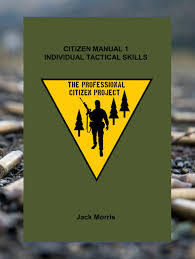
On the recommendation of Alpha Charlie Concepts, I bought a few of the "Professional Citizen Project" Manuals and we're going to review them.

Today, we are reviewing "Citizen Manual 1: Individual Tactical Skills".

Link: Citizen Manual 1

The book covers, as the name implies, basic indivual tactical skills.  It talks about how to shoot, move, and communicate in a potentially hostile environment.  To his credit, the author starts with warning that you can't learn these skills simply from reading, you need to get out and take actual classes with real-world instructors.  This book covers the skills you would learn by taking my fieldcraft class and NC Scout's Scout course.  Get out and train.

The opening chapters are devoted to gear and gear set up, as they should be.  He gives some input on selecting optics, but most of the information is on choosing and setting up a belt kit, load bearing vest, or chest rig.  This is pretty helpful, because a lot of the questions we get in class and a lot of the down time in class is spent on adjusting and setting up student's gear.

Some of the military leadership stuff in the beginning doesn't really apply to our role as armed citizens, in my humble opinion.  Sure, the military decision making process and leadership process is good to know, but to most it's not really applicable.  I don't need to understand commanders intent two levels higher, as there is not really that kind of leadership established.  It doesn't make the book bad at all, it's just filler that most won't understand anyways.

The "Shoot" chapter is outstanding.  He talks about standardizing your groups guns and how to set up a rifle for fighting.  He gives a pretty good discussion on the need to zero and how to zero a rifle and optic. My main disagreement here is on his recommendation of QD attachments for slings.  As most of you know, both Matt and I disagree with this because QD attachments have a habit of coming undone on their own, and, as I've seen a handful of times, can cause a negligent discharge (you know who you are).  

The section on land navigation is good, but very basic.  You need face to face instruction and following a course to actually get good at land navigation (Personally, I'd take Fieldcraft from that TW dude).He gives a great descritopn of dead reckoning and planning a route, so it's good.

The one issue I have in the movement section is his explanation of the purpose of the SLLS (Stop/Look/Listen/Smell).  He says that it is done right after leaving friendly lines to get accustomed to the sights, sounds, and smells of the battlefield.  Maybe is a Marine versus Army thing (although Matt teaches it the same as I do) but I learned that the purpose of the SLLS is to occasionally stop, look, listen, and smell for signs of the enemy and it should be done way more often than just when leaving friendly lines.  By the way, as armed citizens, there aren't really "friendly lines".

He gives a good discussion on the discipline aspects of military movement, like camouflage, light, and sound discipline.  Moving in formations is covered very well.  The only issue here was some use of jargon like REDCON1, WARNO, and OPORD.  Listen, as similar as it is to military actions, civilian preparedness is not the same. If I was moving with a group of legit combat vets, I could just say "REDCON1" and know that everyone is going to lock on, but with a group of folks who are just learning this stuff and maybe just read a book, wouldn't it just be easier to say "GET READY"?  Jargon does make us sound cool, but in all honesty, we aren't going to be issuing WARNO's or FRAGO's in military format, we're just going to tell folks what the new plan is.  Sure, it's the same thing, but why confuse it with forcing folks to learn new jargon?  We are NOT light infantry, even if we are using light infantry skills and tactics.

He only covers three individual movement techniques, but he does cover them well.  He covers the high crawl, low crawl, and the 3-5 second rush.  The techniques and his description are solid.  However, none of them are actually useful for patrolling.  They're great for combat, but knowing things like the creep, kitten walk, or fox step (in TW-2) will help you during patrolling, along with the monkey walk (also in TW2).  

The actions on contact drills are solid and well explained.  He covers the same reactions and battle drills that Matt and I do in our classes.  Unlike a lot of other manuals, he covers reaction to unmanned aerial systems (drones), which is fantastic.  Learn to react to drones overhead (hint: get under overhead cover).

The communications section is very good.  He covers hand and arm signals, radio, and report formats.  He uses all the same formats we do and the COMSEC procedures he covers are the same ones we teach.  The only issue I had here was on disucssing a "slant" report, which is a purely military adminstratvie report (combat power report) that we don't need to waste time on in a civilian context.  We don't have a battalion to track on a wall map.

He begins the survive section with first aid, and he again highly recommends taking a first aid class.  My personal recommendation is that EVERY PERSON on your team needs to have a 2-day wilderness first aid course, a Stop The Bleed course, and a CPR course.  He goes into MARCH and the treament of a good number of injuries.  He covered tactical combat causualty care very well, but, like most books in our circle, combat injuries are focused on too much.  Sure, I should be able to treat a gunshot wound but I bet you I'll need to treat a sprained ankle more often.  Also, when discussing respiration, the main topic covered was tension pneumothorax and the need to carry a 3.25" long 14 gauge needle.  Listen, that's a specialized skill, and you can hurt someone with it.  Yep, it's a good thing to know, but it's not the only cause of respiratory issues (it comes from a combat injury only focus).

There is a good discussion on water, water purification, and food selection.  Very well done, but he does say that when picking out food for your pack, you need to consider SLLS and I'm not exactly sure why, but I'm sure there is a good reason.  

The shelter discussion discusses clothing and keeping your clothes operable.  He describes shelters and how to set up a lean to and an A frame which are good discussions.  The BLISS acronym is also covered.

All in all, it is a very good basic training reference for your group.  Not a bad book to have in your library, if you have minimal training.  It's a good refersher for experienced people as well.

Next time, we'll cover CM-2 Reconnaissance.

Read full Article
post photo preview
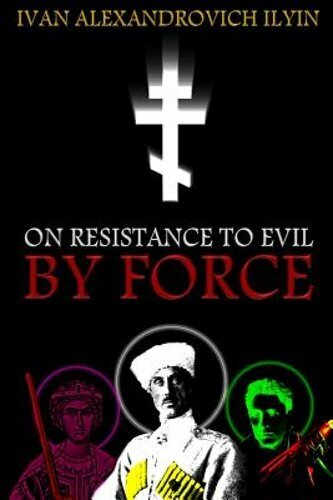
On Resistance to Evil by Force Study
Chapter 18: The Rationale for Resistant Force

I know, I know.  It's been a bit.

Strap in, because Ilyin gets on the top of the dias and begins a legit sermon on our duty to resist by force.  Grab a drink and a snack; let's ride.

His first concept is one that is inescapeable.  If we do not actively resist evil with every means at our disposal, we are not merely being indifferent, we are ENCOURAGING the spread of evil.  Ivan puts it best "He who does not resist it, he yeilds to it and joins its retinue....Here one cannot wait, equivocate, or hide, for when confronted with evil to neither say 'yes' or 'no' means to say 'yes' to it; and therefore one who waits and hides does not 'wait' at all and does not 'hide', but defects and betrays."

Yes, boys and girls, there is no choice but to resist.

Ilyin harshly, and rightly, points out that anyone who thinks that appeasement of or indifference towards evil is naive and leads to it's spread.  By the way, that appeasement and indifference in the modern "liberal".

He points out that "villains" have already broken the social contract and any concept of love of fellow man, so it is silly to think that showing them love will lead to them changing their ways.

Another great quote about our duty: "Anyone who has not put all his personal strength into actively suppressing a crime remains guilty of complicity."  Notice how Ilyin doesn't mention fear of arrest or litigation?  That's because right is right, and those considerations are secondary.  Sorry, but that's true.  Daniel Penny and Kyle Rittenhouse were VINDICATED.

Ilyin equates being too afraid to intervene to complicity.  He also mentions that anyone who chooses to "not get involved" are being spiritually complicit as well.  I agree, wholeheartedly.

According to Iylin, every crime we witness is test that we can't avoid.  We either choose to fight evil or to allow it.  Using excuses like not getting invovled, not wanting to be a snitch, aversion to violence, pity for the villain, or "because of my family" are all dodges that reveal your spiritual immaturity and allow  evil to flourish.

He mentions that we must find the courage to pick up the sword and resist not just for ourselves and the victim, but also to be a positive example to others and encourage them.  He points out that even Jesus said "Do not think that I have come to bring peace, I have come bearing a sword."  Ilyin notes that those who resist are never the aggressor, evil is.  Resistance is ALWAYS a counter-offensive against an evil attack.

Ilyin clarifies that all of history involved evil people attacking weaker and less strong people, until those people banded together and offered effective resistance and set societal norms.  If you don't believe that, read the entire Old Testament.  This idea of organized resistance and then setting societal norms is the entire basis of Western (read as CHRISTIAN) Civilization.  We now outsource that resistance to the government and their police, to our own detriment. 

This idea is reinforced in Romans 13:4, pointing out that those who resist evildoers are servants of God and that they do not bear the sword in vain.  I know that contemporary Christians teach that this verse means only the government, but the text actually says "the one in authority".  Guess who is in authority at your house?  YOU ARE.  If no other law enforcement entity is present in public and a felony is being committed in your presence, every state in the US makes YOU the "one in authority" through Citizen's Arrest laws (you should research and study your state's).  In this context, Romans 13:4 makes you the agent of God's wrath.  Pretty cool, isn't it?

Ilyin complains that those who practice "non-resistance" (we're looking at you, Amish folks) can only do so because others are will do violence on their behalf (reminds me of another quote).  It's a naive way to live that eventually leads to evil spreading and potentially the downfall of society.

There are three things that violent resistance accomplishes:

  1. It stops the particular crime or evil act, protecting the innocent victim.
  2. It protects society as a whole from further crime by deterring others from evil acts (*look what happened to LeRoy Jenkins, I ain't going out like that").
  3. It warns others not to victimize their neighbors lest they meet the same fate.

Ilyin posits that the idea of active resistance isn't merely to punish evil doers, but to eventually deter all from undertaking evil acts.  Sure, it's not likely, but it is a lofty goal indeed.

"As long as evil exists in the human soul, the sword will be necessary to suppress it's external action, a sword strong in it's intervention and in it's punishing strike."

Share your thoughts below.

Read full Article
post photo preview
On Resistance to Evil by Force Study
Chapter 17 - On the Relationship of People in Good & Evil

Ilyin first describes our moral obligation to first attempt through conversation to change someone's evil will.  After that, we can then morally resist their evil deeds.  Our requirement to live together in harmony requires to try and stop evil deeds while they are still just thoughts, to permanently change someone's will.

He points out that we are the worst judges of ourselves.  We all keep and inner and outer self; one reserved for ourselves and one that is public-facing.  We all self-delude ourselves into believing that we are always the good guy and that we have no faults.  We get mad when we are "unfairly blamed", when actually being called out for our bad behavior.

Ilyin describes nonverbal communication well.  Every act or attitude we take is physically manifested within us and becomes part of our outward appearance, whether for good or bad, if peolpe just take time to notice.  He calls it "unconscious integrity of communication and transmission".  

According to Ilyin, you cannot be "evil inside" or "good inside", and not have it affecrt teh outside world.  If you have evil inside, you spread evil around you.  If you are good inside, you spread good to all those you touch. "A good man is a living hearth of good & strength in good, while an evil man is a living hearth of evil, strength in evil and weakness in good."  

We have a duty to resist evil interally within us.

Ilyin says that we are OBLIGATED to resist evil everywhere for the good of all.  He says we are obliged to fight evil at every turn and that we have no right at all to allow evil to go unchecked.  We MUST act against and not let it mutliply.  He claims this is a spiritual call and a public duty. 

He says there is no right to commit evil.  Those who are naive enough to believe that others have a freedom to commit evil will eventually become slaves to it.

After describing this, he points out again that we all have a public duty for the good of all to actively resist evil anywhere.  We obligated to resist evildoers and villains as well as to resist proactively and effectively. 

"Anyone who sends evil must always be cognizant of this and accept that others will be permitted to put a stop to his wicked acts and force him to qualitatively review the evil he sends"

That quote was the basis for law and safety in the old west - before I attack someone, I have to decide if I'm willing to get shot for it.  We need to RETVRN.

Ilyin says that as a society, we all have a desire to see good grow.  Evil people threaten that and threaten our peace, so we must unite against villains in our midst.  Those villains must be met by united resistance and opposition.  Ilyin points out that the resistance to evil is done by few on beahlf of all and benefits a community as a whole.

In the book, Ilyin points out that for any central authority, whether state or church, to exist, it must be supported by the people for the good of the whole, with submitting to it for the good of all.  He believed that the reason that Russia turned communist was because the people desired to submit to the state for the good of themsleves (taking from the rich and giving it to the individual).  The US Constitution as originally written met Ilyin's requirements.  Notably, the church's "Military Orders" or knights, also did.  When governments failed to protect citizens, the church did, and the citizens willingly submitted to the local order.

He points out something here that illustrates our current issues.  He said that as soon as a government begins to appease the villains or the people harbor them, society falls.  That's exactly where we are today.

Let me know your thoughts below.


Read full Article
See More
Available on mobile and TV devices
google store google store app store app store
google store google store app tv store app tv store amazon store amazon store roku store roku store
Powered by Locals