Tactical Wisdom
Politics • News • Preparedness
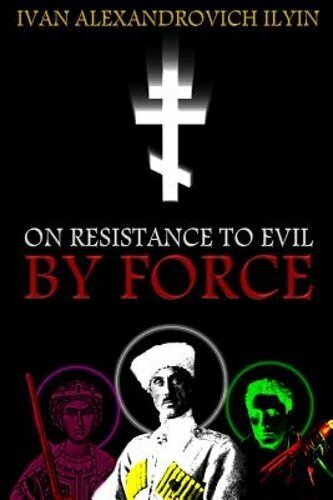
On Resistance to Evil by Force Study
Chapters 1 &2
January 30, 2026
post photo preview
Find the book: https://amzn.to/49OJMnD

On Resistance to Evil by Force is one of my favorites.  Ivan Ilyin was a Russian who was imprisoned and then exiled during the Russian Revolution.  He wrote this book in 1925, during the Revolution, as a response to the writings of fellow Russian Leo Tolstoy, who was exorting Russian Christian men to be pacifists in the face of the Communist revolt.  Tolstoy was more of an anarchist than a Communist, but he felt that Christ led everyone to always be pacifist because the use of force always led to one party subjugating the other.  I find that this argument is exactly what's wrong with the modern church as we struggle with our own Communist revolution.  Ilyin wrote this book to present the case that Christians must resist evil, even by force.

Every few days, I'll post my thoughts on a couple of chapters.  You all can put your thoughts in the comments and hopefully we'll all learn a few things from each other's ideas.  I'll leave the first chapter open to non-members to try and encourage others to become supporters.

It's just as important to train and instruct our minds and moral framework as it is to train our physical bodies on new skills and gear.

Chapter 1 - Introduction

In this chapter, he is basically explaining why he's writing the book.  I get the general impression early on that he really doesn't like Tolstoy, but by the end of Chapter 2, I realized that he had immense respect for Tolstoy's faith, but he despised Tolstoy's ridiculous interpretation of Scripture.  I concur.

Right off the bat, Ilyin lays out this great line: "Ignorance leads him to trials and torments, and through agony the soul is purified and sees, through a clear-sighted gaze, the source of wisdom is given in the form of clarity."  This rings true for all of us.  We make a mistake, we deal with the fallout of the mistake, and then we see what the clear path was.  Hey, wisdom isn't cheap.

As we face a Communist Revolution here, his commentary on the Russian Revolution seems especially relevant: "It is the first time a genuine evil has been given to the human spirit with such frankness."  Yep - Communism is the enablement of greed, theft, and abuse on our fellow man.  Pure evil.

One of the best gems in the introduction is the idea that we shouldn't allow anyone else's condemnation of our faith penetrate to our hearts.  He pointed out that the Bolsheiveks used Christianity as a club to beat people into submission, much like we are seeing now.  His point was to not let them change your mind under any circumstances.  They call it backwards?  Ignore them - they're ones who are wrong.

Another point he illustrated that has parallels in the modern day is that heroes were treated as villains and the weak or timid are treated as virtuous.  The idea is to break down rugged individualism in favor of collectivism (I'm looking at you, Mamdani).  At the time, they vilified anyone who stood up against the Communists and treated as heroes those who gave up and stepped out of the way.  That leads nowhere good, and it's what we're seeing in our society.

The final great point in the introduction: "....imparting a counterfeit facade to the spirit of Christ's teaching poisoned Russian religious and political culture."  False teachers are out there today doing this same thing.  Lesbian pastors, "All are welcome here", and "Jesus is my boyfriend" churches are all preaching pacifist and liberation theology that have absolutely no basis in the Bible.  No, Jesus was not a Socialist ("even when we were with you, we had this one rule, he who does not work does not eat").  Helping the poor and welcoming the traveler does NOT mean give handouts or let people trample your homeland demanding things.

 

Only for Supporters
To read the rest of this article and access other paid content, you must be a supporter
8
What else you may like…
Videos
Posts
Articles
BattlBox Mission 134 Unboxing

Here's my unboxing of BattlBox Mission 134: Every Day Carry. I highly recommned BattlBox.

Link to BattlBox: https://classic.avantlink.com/click.php?tool_type=ml&merchant_link_id=18d5f0dc-a5d5-4617-8d89-3672fa873181&website_id=b54d42a2-3e73-4f03-ac0d-a3e7b99eed53

00:14:14
Hoplite M10 Review

My video review of the Hoplite M10 Reusable Flashbang. It's a great tool available at: https://www.hoplitegear.com/product-page/m10-havoc

00:06:46
Timeline Cleanse

Time for a timeline Cleanse before WW3 kicks off.

00:00:10
INTEL BRIEF - MYANMAR

For the first time in years, the military junta in Myanmar allowed Aung San Suu Kyi to be seen alive and videotaped during her house arrest. The Red Cross was allowed to film a visit.

INTEL BRIEF - ASSASSINATION PLOT

A Trans man has been arrested at Trump National golf course . He had an AR 15, and was conducting pre-attack surveillance ahead of a Trump visit.

INTEL UPDATE - HORMUZ

A vessel has been struck by a missile 20 NM north of Al Khadab, Oman

post photo preview
On Resistance to Evil by Force Study
Chapter 16 - On the Modification of Love

Ilyin starts out by defining what most people consider to be love "What is nice is good", or that which we are sympathetic to.  He points out that perfection is actually what is good and worthy of love.  He posits that people like things that give them pleasure and confuse that for love, but it is shallow and unmeaningful.

On the contrary, spiritual love means that we do what is right, even if it is not pleasant, not fun, and not nice, even if it leads to discomfort, unpleasantness, or difficulty.  For spiritual love, even suffering is worth it.

According to Ilyin, Christ's two basic Commandments were to love God and to love your neighbor.  He points out that when your neighbor (fellow man) is doing evil, resisting him would seem to be in contradiction to "loving" him, but not resisting violates the love of God.  The love of God (doing what is right in His eyes) outweighs any sympathy or "love" for your neighbor.  If someone has removed God from their lives, they need us to tell them "no", rather than modern society telling them "yes", and thus resistance to evil.

The proponents of "love wins" and "love trumps all", claim that condemning people for their choices and evil deeds is labeled as "hate", "intolerance", and "malice", and thus encourage no limits on behavior.  If I truly love my neighbor, I MUST be able to tell him no, that his behavior is unacceptable, and that I will resist their actions.  Refusing to put them on the right path out of "love" is not truly love and is actually helping to condemn their soul.  Ilyin interestingly paraphrases the idea that "acceptance is not a Christian Virtue".

Ilyin reminds us that while we should indeed love our neighbor, we CANNOT EVER love evil in a man.  There are some people who are just evil.  No amount of acceptance or sympathy will ever change them, and we must modify our approach to resistance.

The only thing we can truly love completely without conditions is God.

When true good is confronted by true evil, evil must be destroyed and, as Ilyin says, executed.  When we resist using force, we do not become evil, as, in the end, we pray for the salvation of the soul of the executed person.

Ilyin points out that we begin with disapproval and work our way through a series of escalating responses to evil done in our presence, which can (and should) include ruthlessness against evildoers.  Remember God's commands to Joshua about what to do to anyone who resisted him.  Ilyin posits that true love of good requires it.

He uses the example of Jesus driving the money changers from the Temple as the justification for righteous application of force in the presence of and resistance to evil.

Ilyin says that resistance to evil can be summed up like this: "the struggle is fought with love, but with spiritualized love."

We must resist evil out of a love for good, not for vengeance, revenge, greed, or desire for power.

The struggle against evil is done from love.

Here's the closing quote, which I love: "but the active resistance against the villain's evil designs on others, and against the villain himself is not evil, but good."

Let me know your thoughts below.

Read full Article
post photo preview
On Resistance to Evil By Force Study
Chapter 15: On the Limits of Love

Man, this chapter is FULL of good stuff, despite it being relatively short.

Spiritual Love and devotion is a CHOICE.  It's not born into us, we have to decide to choose good over evil and prefer it.  According to Ilyin, you cannot love everything (as the left says) or love all things equally.  Those who say they do are either incorrect or are so self-centered that they don't actually love anything but themselves.

According to the text, we love everyone to the extent that they do good.  Love of evil, evil people, or the devil is UNNATURAL.

Ilyin writes that we must NEVER accept evil.  Accepting evil, or identifying with it, leads to temptation and eventual submission.

According to our homeboy Ilyin, the only position Christians can take when faced with evil is with a drawn sword.

Next, Ilyin DESTROYS one of the biggest fallacies that the modern church pushes on us: "Love your enemies" refers only to your own personal haters & persecutors, NOT the enemies of God.  BOOM.  Christ never called us to love the enemies of God.  Christ Himself actually had fiery words and threats of retribution for evildoers.  Therefore, loving, forgiving, and caring for the enemies of God is against God's will.

When the Bible says to "forgive", it says to forgive those who sin AGAINST YOU, not God.  The Bible refers to forgiving "brothers" or fellow followers of The Way, not everyone.  In fact, it even points out that if a brother refuses to change, you can treat him as a heathen.  According to Ivan, those who can "forgive all" have a personal worldview, rather than a spiritual one.

According to Ilyin, forgiveness doesn't stop evil, it just stops the emotional impact it has on you.  The villain is still free to impact others.  Forgiveness doesn't mean we shouldn't intervene.

Indifference towards evil done to others shows a lack of will and spirit.

There is a great quote here: "Permissiveness has nothing to do with Christian forgiveness."

When we resist, we must not do so to punish, but to restrain behavior.  

To the villain, forgiveness is encouragement to continue.

Ilyin asks: Do we have to let the victim be harmed by the villain to show our gentleness and restraint?  He points out that this is a betayal.

Straight FIRE chapter.  Discuss below.

Read full Article
post photo preview
On Resistance to Evil by Force Study
Chapter 14: On the Subject of Love

Link to buy book: On Resistance to Evil by Force

Another great chapter, but a little shorter and a bit easier to read, mostly because I already understood this concept and knew all the Scripture he referenced.

Resisting evil is ONLY meaningful if it is done on behalf of good.  In other words, only the virtuous can recognize the evil and resist it from a stance of wanting to do good.  When evil happens to oppose some other evil, it is usually in service of it's own evil ideas, rather than a desire to do good.  At best, it is a collision of evil intentions between two others.  This means that us, as the virtuous, have to fight evil on two fronts, rather than just one.  This gives lie to the idea that "the enemy of my enemy is my friend"; no, he is still your enemy and you'll have to fight him too, as soon as your paths diverge from the current same direction.  As Ilyin quoted in the book, if one snake eats the other snake, there is still a snake to deal with.

Ilyin points out that resisting evil is a net good and thus stems from spritual love.  

Love without a spiritual component is risky.  That leads to temptation and the potential to do evil under the guise of advancing love.  It becomes blind and self-defeating.  The spiritual component is what compels us to be willing to die for something other than ourselves.

Ilyin points out the truth in Matthew 22:38 (Jesus replied, "Love the Lord your God with all your heart, with all your soul, and with all your mind - this the First and Greatest Commandment", you heathens).  We must love God first in order to love our neighbors and see them in a new light.  Only then can we truly "Love thy neighbor."  Loving God is required and is inseparable from loving your neighbor.  This means that you see the Holy Spirit in others, just as it is in you.  

The movie The Road comes to mind.  In it, the father keeps telling the boy that they are "carrying the fire".  When the father dies and the boy meets a new family, he first asks them if they are "carrying the fire".  I think this is the same idea.

According to Ilyin, you must be a Son (or Daughter) of God to see anyone else as a Son of God.  This loves gives you a feeling of connection to something bigger than yourself.  These include: God, Church, homeland, your leaders, the other people.  This connects you to a cause that you would be willing to die for.

Ilyin writes that those who lack spiritual love usually put usefulness and equality above divinity (sound familiar?).  They say that everyone is equal and the no one is right or wrong.  This is where "living their truth" comes from.  They see events as destined to happen or inevitable.  They believe that everyone's happiness is more important than anything else.

On the other hand, those with spiritual love generally put divinity and goodness above all else, especially over usefulness or happiness.  Spiritual love knows that all are not equal.  This is where Ilyin drops the BANGER quote of the day: There are those "who are better off being killed than allowed to do evil."  WOW.  This is truly loving thy neighbor.  It's saying I love you too much to let you destroy your soul with an evil act, so I will stop you.  In this section, we see Ilyin quote the three eyewitness accounts of Jesus laying it down with the millstone quote (Matthew 18:6, Mark 9:42, and Luke 17:1-2).  One with spiritual love also knows the danger of letting "happiness" be the standard, because most people are perfectly happy with sin.

Another great Ilyin quote is in the chapter's closing:

"Noble death is always better than shameful life."

SIde note, in this chapter Ilyin leaves a footnote that references Heraclitus, fragment 49:

"To me, one man is worth 10,000 if he is first rate."

This means that a man with wisdom and courage is better than 10,000 without.  Strive to be the one man.  Be worthy of each other.

Let me know your thoughts below.

Read full Article
See More
Available on mobile and TV devices
google store google store app store app store
google store google store app tv store app tv store amazon store amazon store roku store roku store
Powered by Locals