

Tactical Wisdom
Politics • News • Preparedness
A community of preparedness people, with a biblical foundation. We discuss preparedness advice, my books, and current events.
Interested? Want to learn more about the community?
Intel Brief - Cuba Incident

Cuba claims to have been involved in a firefight with a US-registered vessel inside her territorial waters. The Cuban Border Guard claims to have approached a vessel bearing Florida watercraft registration FL7726SH near the El Pino Channel (Falcones Cay). They claim that someone on board the Florida vessel opened fire, wounding the commander of the Border Guard vessel. The Border Guard vessel returned fire, killing 4 and wounding 6.

This incident is suspicious as that registration comes back to a fishing vessel. Most fishing vessels don't have 10 people on board. Also, it's hard to believe that anyone fired on a Cuban police vessel.

We shall see.

Interested? Want to learn more about the community?
What else you may like…
Videos
Posts
Articles
Hoplite M10 Review

My video review of the Hoplite M10 Reusable Flashbang. It's a great tool available at: https://www.hoplitegear.com/product-page/m10-havoc

00:06:46
Timeline Cleanse

Time for a timeline Cleanse before WW3 kicks off.

00:00:10
INTEL UPDATE - GUYANA

This appears to be video from the fighting on the Venezuela-Guyana border.

00:00:36
Intel Brief - Minneapolis

Leftist groups are planning on rmaping up operations through Monday in an attempt to bring ICE operations in Minneapolis back into the news cycle.

INTEL BRIEF - MEXICO

The Mexican Army, with US SOF help, has killed a senior CJNG leader. In response, CJNG is on a RAMPAGE, and have apparently killed Americans.

CFC may go live

Intel Update - Mexico

There are indications of higher than normal activity at MCB Camp Pendleton. I've got a couple of calls out on this.

post photo preview
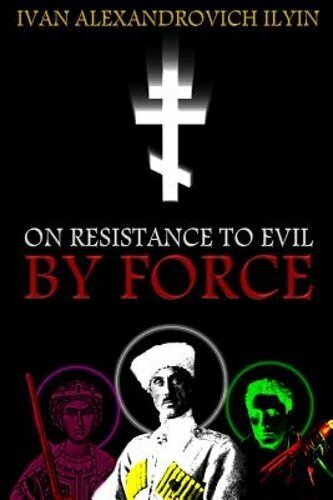
On Resistance to Evil By Force Study
Chapter 8 Defining the Problem

Man, another banger of a chapter.  Let's dig right in.

I agree with Ilyin's preposition that the main issue is the spiritual admissibility of resistance to evil through physical compulsion and suppression, or force.  Even now, when we are faced with the collapse of western society, people keep givng me all the reason why they shouldn't resist evil in their presence.  We see people get attacked in public and almost always, perfectly capable men just stand around watching, because "I don't want to get sued" or "I might go to jail'.  In this chapter, Ilyin specifically calls out these people.

Ilyin lays out several conditions that must be met before the use of force to resist evil can be met, and I think they are very good.

First, the person must present true evil.  The evil human will must be expressed via an external act; either against you or another person.  The main problem Ilyin complained about in 1925 is the one we face today: Defining evil in people as an ailment, delusion, weakness, accident, or mistake is an evasion of the issue and absolves the wrongdoer of any responsibility.  That's our entire modern society.  I saw a video today of adults pelting NYPD officers with snowballs with no consequences.  Shameful.

Second, we must perceive the evil accurately.  We have to call it out for what it is.  Correctly perceiving evil does NOT mean accepting it - it simply means knowing it when we see it.  Most people under-play evil or evil motives.  Others just simply prefer not see it right in front of them - straight denial.  Too many people hide behind their "faith" and claim that wicked actions and wickedness can't define people - it's just a wrong done "in the moment".  As a society, we frequently turn our backs on evil, losing all right to fight it or even comment on it, because we allowed it to go on.  

Ilyin points out that only those who have see evil and resisted or rejected it before can fight it.  Those who haven't risk being morally harmed by it.   Also, he points out that anyone who has ever justified it has been morally affected by it and can't make proper judgments.  

It's worth noting that Ilyin mentions Matthew 18:6 here, mentioning the infamous millstone.

Third, according to Ilyin, in order to use force to resist evil, you must have a genuine love for good. In order to know evil, we must know good and to resist evil, we must have a preference for good.  The rigteous defender must hate the idea of evil defeating good.  Most people are simply indifferent, having a preference for good, but not really caring if evil actually wins.  There is a great quote from page 56 on this: "The true resistance to evil cannot be reduced to simply assigning blame; and cannot be exhausted by simply rejecting it; no, it puts before the person the question of life & death; demanding from him an answer, whether or not he live under the yoke of the conquering evil, and if so, how exactly he will live as if this victory had not occurred."  Man, hits me right in the chest, as I feel exactly this came way.  You see, I CANNOT live under the conditions the left wants to me under.  CAN NOT.

Fourth, to resist eil you must have a sense of justice (Ilyin calls it "a rigorous attitude toward the world process") and a decisive spirit.  In other words, the capacity to make a quick decision that justice if the right thing, right now.

Fifth, force must be the only thing that will work to stop or prevent the imminent evil act.  We must be beyond the capacity to prevent it via words or argument.  It has to be the only way to resolve it at that point.  Ilyin points out that the biggest failure here is the attitude that it is "none of my business". 

Ilyin ends this chapter on a strong note, pointing out that evil must be opposed and stopped.

This book gets better each time I read it and I find more and more that we are in an existential war with evil forces.

Let me know your thoughts below.



Read full Article
post photo preview
On Resistance to Evil By Force Stdy
On Force & Evil

I know that I said we'd do two chapters, but Chapter 7, On Force and Evil, is so full of important points, that I felt we needed to delve into that one a little deeper.

It begins with the idea that most feel that the use of force on others is inherently evil because we are compelling someone rather than appealing to their will via clarity & love and doing so against their consent.  This doesn't actually make it evil though if it is done through the lens of spirituality and love (for example, because it is the right thing to do).

Some people, according to Ilyin, affirm their independence by pursuing evil deeds and possess a dead soul.  Love is dyting inside these people, despite their claims.  We aren't fighting spirituality when we resist such people (as Tolstoy and modern Christian Pastors say), but actually ANTI-SPIRITUALITY.  We're counteracting malice, not love.  That's the key difference.

If we don't physically resist them first, our appeals from clarity and love will only irritate them and drive them further into a frenzy.  I want to unpack this in light of yesterday's shooting in Rhode Island, because that was truly evil.  The left, and the trans movement, demands that we not only accept, but SUPPORT the evil idea that God makes mistakes.  When this man came out to his family as trans, he DEMANDED that they abandon their beliefs and become supportive of him.  When they didn't, and then they ATTEMPTED TO APPEAL TO HIM FROM LOVE AND CLARITY, it drove him into such a frenzy that he tried to kill them all.  This case from yesterday validates EXACTLY what Ilyin said in this paragraph 100 years ago.  You need to understand that trying to convince these people that they are wrong will only push them to more violence.  I'm not saying we shouldn't try, but I am saying you need to be ready for the physical consequences of it.

The bigger point Ilyin makes, and it's just as valid today, is that they cannot see past their instant gratification and anger towards any who would interfere with it until they are physically compelled to stop.  A guy robbing you isn't listening to you.  A trans shooter firing at random people in the mall doesn't care about Scripture quotes.

A great point Ilyin makes that we could all benefit from is that thinking that you can appeal to these people with facts and logic is both spiritually and psychologically naive.  People will not listen to facts that discount their worldview.  If you don't believe me, talk to a Q fan or climate changer about objective reality for like 2 minutes (or a sad ham about the reality that even the FCC doesn't care).  Stop thinking that memes and a clever Twitter reply game is going change hearts and minds (or souls).

The villain expresses his dissent with fury.  Not resisting him forcefully from the outset only makes it worse.  He will be more furious the next time.

Ilyin does an interesting exercise here about body language.  We use body language during conversations to convey sympathy and show that we are kind.  Therefore, the opposite attitudes can also be expressed through body language.  You can immediately tell if someone is intending violence or hate, by their body language.  Ilyin was out there dispensing Tactical Wisdom before it was cool.

On that same note, the villians use their bodeis to do evil, and we can use our bodies, through physical resistance to that evil, to express our disapproval and rejection.  It is a sign of our "resolute, wilful resistance to forbidden behavior".  Ilyin had a great way with words.

Failing to physically resist an evil physical act (an assault, shove, violence) is silent encouragment and complicity.  This is us turning "silence is violence" back on them.  If you allow someone to harm an innocent in front of you, it becomes easier for others to decide to harm innocents.  Instead, if every time a thug pushed an old lady on a train they got knocked out by a righteous protector, people would think twice before shoving others.

Here's a great Ilyin quote on this that I am thinking of having made into a wall hanging here at the Camp: "...And seeing the futility of Spiritual and verbal compulsion, he cannot, dares not, should not refrain from external suppression" (use of physical force).

Followed by: "For if the body of man is not above a man's soul and not more sacred than his spirit, it is not at all an inviolable sanctuary for malice or an unapproachable refuge for vicious passions".  BANGER.

He also points out that to failing to resist is moral prejudice ("we are above that"), spiritual cowardice ("I don't want to go to jail/be sued"), weakness, and sentimental superstition ("the Church says we cannot be violent because Jesus said turn the other cheek").  All of these attitudes lead to the non-resistance of evil.  Ilyin calls this spiritual desertion, betrayal, collaboration, and self-defilement.  He's right.

Here's a great illustration by him from the bottom of page 47 and top of page 48: "He is right who pushes the first-time explorer away from a cliff's edge, who will rip poison from the clutches of a hardened suicidal, who will strike the hands of the aiming revolutionary in time, who will knock down the arsonist at the last minute, who will expel blasphemous & disgraceful people from the temple, who will rush with arms at a crowd of soldiers raping a girl, who will bind the deranged and tame the possessed villain."  The reference to the revolutionary was about an attempt on the life the Tsar, but applies equally here.  Oh, and the one about the temple - that is 100% what should have happened inside that Minnesota church.

Ilyin has a pair of great quotes about the use of force to resist evil:

  1. "Acts which faithfully and courageously manifest a spiritual separation between the villain and non-villain."
  2. "Are they a betrayal of God's work on Earth? No, but faithful and dedicated service to Him."

The modern church could learn from #2, because that is an argument I get alot.

Here's a great quote on the motivation of those who use force for good versus those who do so for evil: "But he seems to say to the compelled: 'behold, you control yourself inattentively, erroneously, insufficiently, badly, and stand on the eve of a fatal precipice from which there is no turning back', or: 'you humiliate yourself, you rave madly, you trample on your spirituality, you are possessed by the breath of evil, ruin, and death, - stop, for here is the limit!".  I love "for here is the limit".

Here's a few more banger quotes to illustrate the case for force against evil:

  1. "The attacker attacks, the suppressor deflects."
  2. "The attacker demands obedience to himself, whereas he who compels requires obedience to the spirit and it's laws."

Physical compulsion against a bad guy and malicious violence against an innocent are not the same. They should not be confused as the same.

Ilyin pointed out that to gain a root, evil puts on a mask and pretends to be virtue, much like in our modern society.  "Evil finds entry to the soul much easier when it creeps and pilfers than when it attacks or destroys; it is more appropriate for evil to wear a mask than to reveal it's hideousness at the outset."  This is the LGBTQ movement and Drag Queen story hour.  They didn't start with "we're coming for your kids" - they started with "love is love" and "we just want to be equal".  The evil came later, after it was already entrenched.  As Ilyin put it they "praise evil,  reproach good, lie, slander, flatter, propagandize, and agitate."  Does any of that sound familiar?

Ilyin points out that once they are in charge, they immediately begin to issue orders and prohibitions, exile enemies, compel people by threats, offer goodies to their faithful, and appeal to everyone's bad instincts (envy/greed).

Friends, this is where you are TODAY.  This chapter was incredibly thought provoking.

Let me know your thoughts.

Read full Article
On Resistance to Evil by Force Study
Chapters 5 & 6

As we continue through the book, we are now on Chapters 5 & 6.  

Chapter 5: On Mental Compulsion

Mental compulsion, as we learned last time, can be either internal (from our own spirit) or external (arguments and warnings from others).  Inducement, on it's own, is not inherently evil.  We can can compel or induce ourselves to do either good or evil.  

I found it interesting that Ilyin pointed out that forcing a smile or agreement when you don't really feel it is inherently evil, because you are compelling yourself against your own better nature.  Left unchecked, you will find yourself accepting more and lying more.  It represents a spiritual betrayal of your own body's principles.

On a daily basis, Ilyin notes, we have to induce ourselves against things like laziness and spiritual weakness, and this inducement is good.

A great point he makes is that believing in unconditional free will, or "I can do whatever I want without consequences", is naive and silly.  He also states clearly that believing that nonviolence wins people over or will change their behavior is also naive.

As man is a socially dependent and socially adaptable being, Ilyin says that we need to educate and induce the spinless and weak.  When we don't disapprove or object to their moral weakness, it encourages more indulgence, acceptance, and eventual complicity.  In other words, if we don't object to evil, the idea that "everything is permitted" wins.

In another stunning parallel with the modern world, Ilyin pointed out that children develop from the teaching and influence of others, whether that be their parents, teachers, or church.  Children are easy to induce into patterns of thinking.  In the modern context, parents are so involved in their own lives that teachers and day care providers have an out-grown influence and that is why we are where we are today.

He also says that social condemnation of behaviors and ideas plays a role (taking a page from Blaine Pardoe and social enforcement).  My best example here is that sexual deviance (homosexualtity/trans/etc) used to be socially condemned and now it isn't.  Would you say our society is better or worse with the removal of social condemnation?  Also, most of the performative protesting we see know is "social condemnation", for example, protestors harassing a business for refusing to issue a statement against ICE or Trump.  I'd say Ilyin was spot on.

Following this, he points out that social compulsion or condemnation should only be used to STRENGTHEN our own spiritual self-inducement.  Laws should not be written to punish, but to encourage voluntary compliance in line with our own societal/cultural values (in other words, "hate speech" laws are evil).

He ends the chapter with the idea that if we have laws that we don't enforce or enforce selectively because they don't reflect our values, they become meaningless words on paper.

Chapter 6: On Physical Compulsion and Suppression

Ilyin opens with the idea that if self mental inducement and external mental compulsion don't work, only physical complulsion can.  He gives a great example in the chapter of a child taking a boat out into the open sea.  The child didn't self-induce themselves not to, and if you warned them not to, would you just let them get on the boat and go out to sea?  No, you would physically stop the child.

Another great example is a friend who is so angry that they are about to commit an assault or worse.  Their self-inducement failed due to anger, they wouldn't listen to you, so then you are forced to physically restrain them until they come to their senses again.  These two uses of physical force are inherently good, but Tolstoy's definition would render them evil.  Also, we know that using physical force to prevent a crime or potential physical harm (stopping someone from stepping in front of a bus) is OK, so therefore it is not inherently evil.

On it's own, once again, physical compulsion cannot be either good or evil, it is neutral.  The state of our soul during the physical measures is what determines whether it is an evil act or a good one.  Hence, the intentional use of violence or force on another is not inherently evil, nor is it inherently good.  It's PURPOSE is what can be evil or good.

If the intent of physical compulsion or suppression is to increase someone's own internal compulsion (ie, restraint to make them "stop and think") and correction, then it is good.

If the use of physical compulsion seeks to weaken or destroy it (torture, etc), then it is evil.

Another interesting parallel Ilyin draws to the current day, for me, was when he pointed out that compelling or inducing others to hate other people or groups of people is inherently evil.  This is the left calling for everyone to hate white people or ICE or Trump or MAGA, take your pick.

Iylin points out that violence is unpleasant and causes suffering on both sides, but that doesn't make it evil.  Likewise, everything that brings us pleasure or is pleasant isn't inherently good (drugs/sexual deviance).  It is, once again, the intent that does so.

An argument he makes that I like is that people often get mad when we do good, so should we stop doing good?  Of course not.

The final point in this chapter that I liked was that an insistance on shared standards is not evil.  A refusal to do so is.

Please share your ideas and thoughts on these chapters in the comments.

Read full Article
See More
Available on mobile and TV devices
google store google store app store app store
google store google store app tv store app tv store amazon store amazon store roku store roku store
Powered by Locals