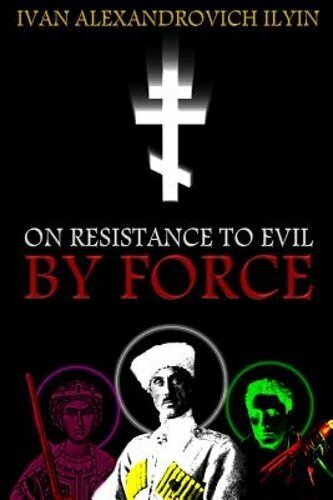
I know that I said we'd do two chapters, but Chapter 7, On Force and Evil, is so full of important points, that I felt we needed to delve into that one a little deeper.
It begins with the idea that most feel that the use of force on others is inherently evil because we are compelling someone rather than appealing to their will via clarity & love and doing so against their consent. This doesn't actually make it evil though if it is done through the lens of spirituality and love (for example, because it is the right thing to do).
Some people, according to Ilyin, affirm their independence by pursuing evil deeds and possess a dead soul. Love is dyting inside these people, despite their claims. We aren't fighting spirituality when we resist such people (as Tolstoy and modern Christian Pastors say), but actually ANTI-SPIRITUALITY. We're counteracting malice, not love. That's the key difference.
If we don't physically resist them first, our appeals from clarity and love will only irritate them and drive them further into a frenzy. I want to unpack this in light of yesterday's shooting in Rhode Island, because that was truly evil. The left, and the trans movement, demands that we not only accept, but SUPPORT the evil idea that God makes mistakes. When this man came out to his family as trans, he DEMANDED that they abandon their beliefs and become supportive of him. When they didn't, and then they ATTEMPTED TO APPEAL TO HIM FROM LOVE AND CLARITY, it drove him into such a frenzy that he tried to kill them all. This case from yesterday validates EXACTLY what Ilyin said in this paragraph 100 years ago. You need to understand that trying to convince these people that they are wrong will only push them to more violence. I'm not saying we shouldn't try, but I am saying you need to be ready for the physical consequences of it.
The bigger point Ilyin makes, and it's just as valid today, is that they cannot see past their instant gratification and anger towards any who would interfere with it until they are physically compelled to stop. A guy robbing you isn't listening to you. A trans shooter firing at random people in the mall doesn't care about Scripture quotes.
A great point Ilyin makes that we could all benefit from is that thinking that you can appeal to these people with facts and logic is both spiritually and psychologically naive. People will not listen to facts that discount their worldview. If you don't believe me, talk to a Q fan or climate changer about objective reality for like 2 minutes (or a sad ham about the reality that even the FCC doesn't care). Stop thinking that memes and a clever Twitter reply game is going change hearts and minds (or souls).
The villain expresses his dissent with fury. Not resisting him forcefully from the outset only makes it worse. He will be more furious the next time.
Ilyin does an interesting exercise here about body language. We use body language during conversations to convey sympathy and show that we are kind. Therefore, the opposite attitudes can also be expressed through body language. You can immediately tell if someone is intending violence or hate, by their body language. Ilyin was out there dispensing Tactical Wisdom before it was cool.
On that same note, the villians use their bodeis to do evil, and we can use our bodies, through physical resistance to that evil, to express our disapproval and rejection. It is a sign of our "resolute, wilful resistance to forbidden behavior". Ilyin had a great way with words.
Failing to physically resist an evil physical act (an assault, shove, violence) is silent encouragment and complicity. This is us turning "silence is violence" back on them. If you allow someone to harm an innocent in front of you, it becomes easier for others to decide to harm innocents. Instead, if every time a thug pushed an old lady on a train they got knocked out by a righteous protector, people would think twice before shoving others.
Here's a great Ilyin quote on this that I am thinking of having made into a wall hanging here at the Camp: "...And seeing the futility of Spiritual and verbal compulsion, he cannot, dares not, should not refrain from external suppression" (use of physical force).
Followed by: "For if the body of man is not above a man's soul and not more sacred than his spirit, it is not at all an inviolable sanctuary for malice or an unapproachable refuge for vicious passions". BANGER.
He also points out that to failing to resist is moral prejudice ("we are above that"), spiritual cowardice ("I don't want to go to jail/be sued"), weakness, and sentimental superstition ("the Church says we cannot be violent because Jesus said turn the other cheek"). All of these attitudes lead to the non-resistance of evil. Ilyin calls this spiritual desertion, betrayal, collaboration, and self-defilement. He's right.
Here's a great illustration by him from the bottom of page 47 and top of page 48: "He is right who pushes the first-time explorer away from a cliff's edge, who will rip poison from the clutches of a hardened suicidal, who will strike the hands of the aiming revolutionary in time, who will knock down the arsonist at the last minute, who will expel blasphemous & disgraceful people from the temple, who will rush with arms at a crowd of soldiers raping a girl, who will bind the deranged and tame the possessed villain." The reference to the revolutionary was about an attempt on the life the Tsar, but applies equally here. Oh, and the one about the temple - that is 100% what should have happened inside that Minnesota church.
Ilyin has a pair of great quotes about the use of force to resist evil:
- "Acts which faithfully and courageously manifest a spiritual separation between the villain and non-villain."
- "Are they a betrayal of God's work on Earth? No, but faithful and dedicated service to Him."
The modern church could learn from #2, because that is an argument I get alot.
Here's a great quote on the motivation of those who use force for good versus those who do so for evil: "But he seems to say to the compelled: 'behold, you control yourself inattentively, erroneously, insufficiently, badly, and stand on the eve of a fatal precipice from which there is no turning back', or: 'you humiliate yourself, you rave madly, you trample on your spirituality, you are possessed by the breath of evil, ruin, and death, - stop, for here is the limit!". I love "for here is the limit".
Here's a few more banger quotes to illustrate the case for force against evil:
- "The attacker attacks, the suppressor deflects."
- "The attacker demands obedience to himself, whereas he who compels requires obedience to the spirit and it's laws."
Physical compulsion against a bad guy and malicious violence against an innocent are not the same. They should not be confused as the same.
Ilyin pointed out that to gain a root, evil puts on a mask and pretends to be virtue, much like in our modern society. "Evil finds entry to the soul much easier when it creeps and pilfers than when it attacks or destroys; it is more appropriate for evil to wear a mask than to reveal it's hideousness at the outset." This is the LGBTQ movement and Drag Queen story hour. They didn't start with "we're coming for your kids" - they started with "love is love" and "we just want to be equal". The evil came later, after it was already entrenched. As Ilyin put it they "praise evil, reproach good, lie, slander, flatter, propagandize, and agitate." Does any of that sound familiar?
Ilyin points out that once they are in charge, they immediately begin to issue orders and prohibitions, exile enemies, compel people by threats, offer goodies to their faithful, and appeal to everyone's bad instincts (envy/greed).
Friends, this is where you are TODAY. This chapter was incredibly thought provoking.
Let me know your thoughts.